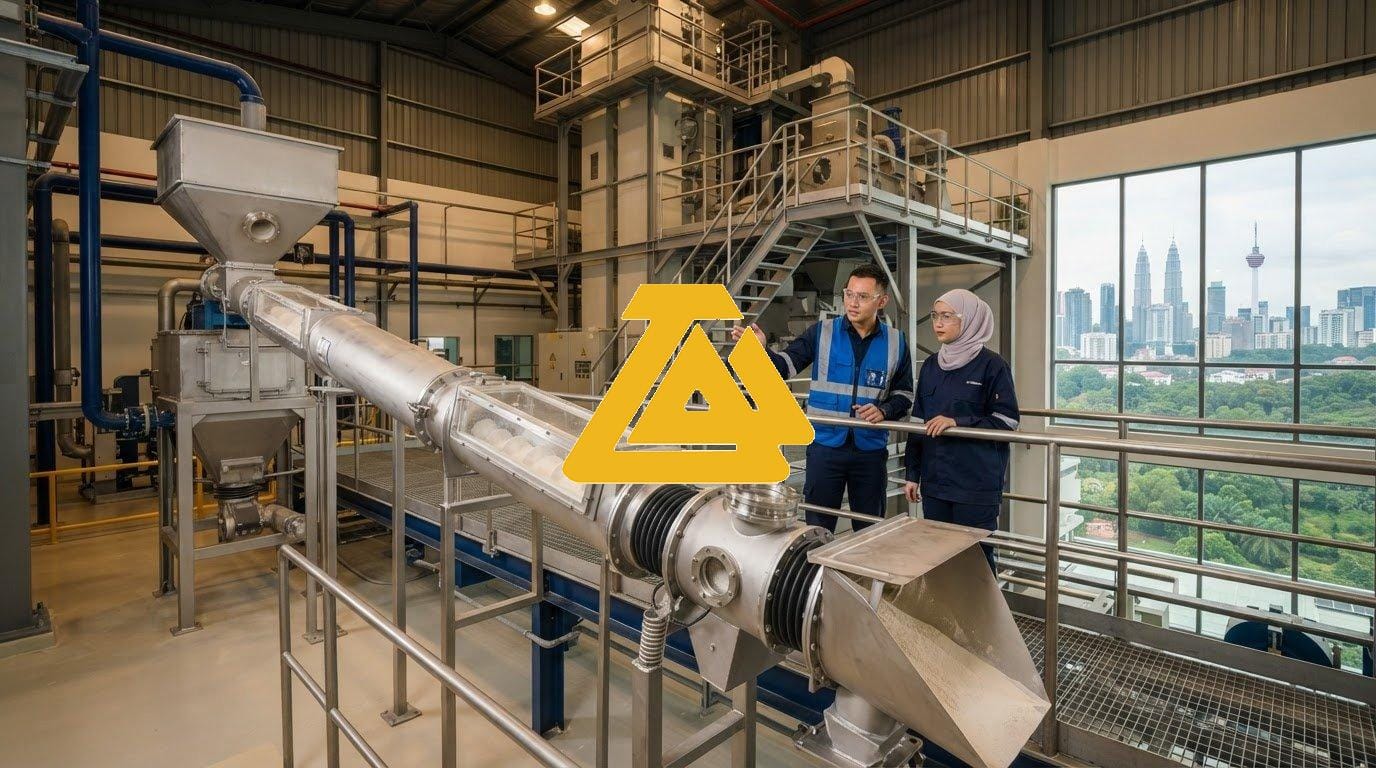
The conveyor that looks right on a specification sheet may not suit the powder or process on your plant floor. Choosing a screw conveyor for powder handling means looking beyond capacity and equipment type: powder behaviour, operating conditions and how the conveyor fits into the wider production line all matter. A mismatch can complicate technical reviews and procurement, and leave factory teams without the dependable material flow they need.
Before committing to equipment, gather clear selection criteria. This guide explains what powder and process information to collect, which practical factors to compare, and how to frame requirements for a Malaysian facility, including operations in the oil and gas and palm oil sectors. It also covers how to move from an initial assessment to a more informed project discussion. Totalmas supplies Mec Handling conveyors and shares insights on industrial material-handling solutions in Malaysia.
Key Takeaways
- Document powder composition, particle characteristics and operating conditions before developing an equipment specification.
- Assess a screw conveyor for powder handling against material behaviour and plant requirements, not its equipment label alone.
- Compare enclosure, feed control, route layout and maintenance access to clarify which configuration questions matter for your process.
- Align engineering, procurement and process teams on material, duty, layout, interfaces and operating requirements before the buying review.
- Totalmas supplies Mec Handling conveyors for industrial material-handling applications in Malaysia.
What a Screw Conveyor for Powder Handling Does in an Industrial Process
A screw conveyor is a mechanical system that moves bulk material along an enclosed trough or tube using a rotating helical flight around a central shaft. In a screw conveyor for powder handling, the screw advances material from an inlet towards an outlet. Its role is to connect process stages and transfer powder along a defined route, not automatically to provide a precise feed rate.
The screw, casing, drive and inlet-outlet arrangement work as a system. Material enters through an inlet, the driven screw rotates within the trough or tube, and the flight moves powder towards the discharge point. The Screw conveyor has a long history as a bulk-material handling mechanism, but its basic principle does not mean one design will suit every powder. Powder flow behaviour, moisture, particle characteristics and process conditions all affect how it moves and what the equipment must do.
How a screw conveyor moves powder through a plant
In a plant layout, the inlet may receive material from a storage hopper or another process stage, while the outlet transfers it to equipment further downstream. Match the conveyor route and transfer points to the actual sequence of operations. Conveying answers, “How does material get from here to there?” Feeding or metering answers, “How much material enters the next process over time?” A screw conveyor can move powder without necessarily controlling that rate precisely. Where controlled dosing matters, define the feed arrangement and control requirements separately.
Where powder conveyors fit in Malaysian industrial operations
In palm oil processing, a screw conveyor may be relevant where a particular stage handles dry bulk powder between storage, preparation or processing equipment. Identify the material and duty for the specific plant rather than assuming them from the sector alone. This matters especially where a site’s process includes both bulk solids and other material forms.
Oil and gas operations may also involve powder transfer. For example, where drilling operations handle specified powders such as barite or bentonite, a screw conveyor could form part of the transfer route between process stages. Define the material and operating conditions before treating this as an equipment application. In either sector, the conveying task, process interfaces and required feed control are more useful starting points than the equipment label alone.
Which Powder and Process Details Should Shape Your Conveyor Specification?
Powder behaviour must inform conveyor selection because material properties and operating conditions affect how powder moves and what the transfer duty requires. Start with measured process data rather than assumptions based on the material name. For a screw conveyor for powder handling, document the powder, required throughput, route and operating pattern so the equipment discussion reflects the actual process.
What powder characteristics matter before equipment selection?
Gather the powder’s composition and available particle-size distribution and bulk-density data. Record whether it is cohesive, abrasive, fragile or prone to dusting, using process knowledge or material data. These characteristics can influence transfer behaviour and the requirements for containment, handling and maintenance. If the powder’s condition varies between batches or process stages, record that variation rather than relying on a single representative description.
Capture moisture conditions and the process-temperature range in degrees Celsius. Use plant data rather than assumed standard values, as conditions can vary between storage, transfer and processing stages. Note changes in powder condition during normal operation so the specification reflects the range of conditions the equipment may encounter.
How do plant conditions affect the duty requirement?
Map the route from feed point to discharge point. Record conveying distance in metres, elevation changes, inlet conditions, transfer points and downstream equipment. Include the process sequence to distinguish steady transfer from a requirement to control how much material enters the next stage.
State required throughput in an appropriate metric unit, such as kilograms per hour or tonnes per hour, and note whether the duty is continuous or variable. Document operating hours, cleaning needs, inspection and maintenance access, and dust-containment requirements. For a Malaysian palm oil or oil and gas facility, base the review on the specific powder and process rather than assuming a sector-wide duty.
Include safe access and dust management in the facility review, alongside enclosure and housekeeping needs. Clear documentation helps engineering and procurement teams assess the material, operating conditions and equipment interfaces on the same basis. For further context on industrial material-handling solutions in Malaysia, explore Totalmas’s conveyor insights.
How to Compare Screw Conveyor Configurations for Powder Handling
There’s no universal best configuration for every powder. Start the comparison with the duty: what material must move, where it needs to go, whether its discharge rate must be controlled, and what access the plant provides. The name “screw conveyor” alone doesn’t show whether an arrangement fits the application. Compare options against documented material and process conditions, then verify the details that affect installation and operation.
Screw conveyor or screw feeder: which duty are you specifying?
A conveyor transfers material between points. A feeder controls discharge from a source or supplies material to the next process stage at a required rate. One installation may need conveying, feeding or both functions. Define where each function begins and ends in the process, and whether steady transfer is sufficient or controlled feeding is required. This distinction helps the project team describe the duty clearly without assuming a particular design will deliver a specific rate or accuracy.
Which layout and enclosure questions should buyers compare?
Use the plant layout to assess whether a horizontal, inclined or vertical route is relevant. Consider transfer points, available space, connections to upstream and downstream equipment, and access for inspection and maintenance. Enclosure requirements should reflect the powder and site needs, including containment, dust management and housekeeping. Treat these as comparison questions rather than performance guarantees. Suitability depends on the equipment design and application data.
| Project need | Configuration question | Information to verify |
|---|---|---|
| Material transfer | Does the route connect the required feed and discharge points? | Powder details, inlet and outlet locations, and process interfaces |
| Controlled discharge | Is a feeder function required as well as conveying? | Required feed behaviour and its place in the process sequence |
| Plant layout | Does the proposed route fit the documented horizontal, inclined or vertical path? | Route, elevation changes, available space and connection points |
| Containment and upkeep | What enclosure and access arrangements suit the facility? | Dust-control needs, cleaning approach and maintenance access |
Compare each option against the same project brief so engineering and procurement can see where requirements differ. Assess a screw conveyor for powder handling in relation to the actual material and process, rather than selecting by equipment name alone. Totalmas supplies Mec Handling conveyors and offers industrial material-handling solutions in Malaysia. Define the duty and application requirements before turning a general configuration label into a project specification.
What Should a Malaysian Factory Include in Its Screw Conveyor Buying Review?
A well-prepared buying review gives engineering, procurement and the process owner a shared basis for evaluating a screw conveyor for powder handling. Build the equipment brief around the actual material and plant duty, then record unknowns for engineering review rather than estimating them. This is especially useful when a project involves several transfer points or interfaces with existing equipment.
What information belongs in the project specification?
Use a numbered review sequence to make the brief easy to assess:
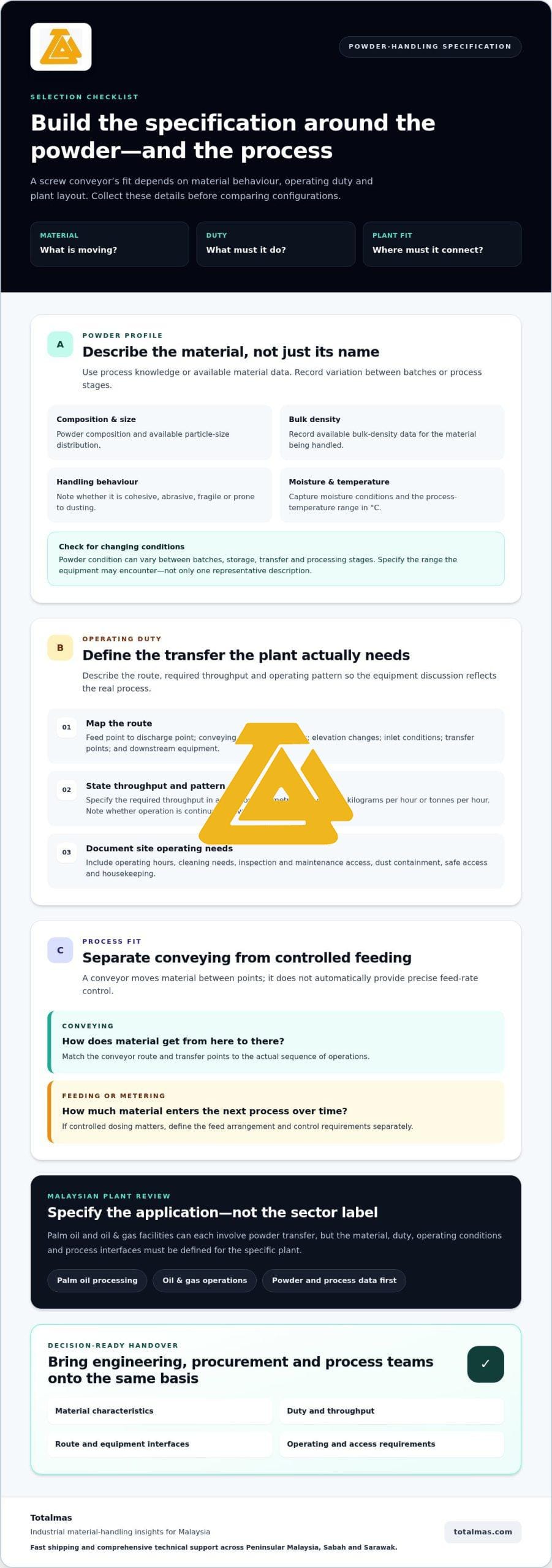
- 1. Define the material: Record the powder composition and available particle, density, moisture, temperature and flow information.
- 2. Describe the duty: State the required throughput in metric units and clarify whether the task is steady transfer, controlled feeding or both. Include the operating schedule.
- 3. Map the layout: Document the route, dimensions, elevation changes, inlet and discharge points, and access available for installation and maintenance.
- 4. Identify interfaces: Note upstream and downstream equipment, process connections, control requirements and any constraints from the existing plant.
- 5. Record operating requirements: Include cleaning, containment, inspection and maintenance needs, along with relevant site conditions.
If measurements or process data are unavailable, flag them for review with the process owner and engineering team. Separating confirmed information from open items helps procurement avoid carrying assumptions into technical comparisons. Teams in palm oil, oil and gas and other Malaysian industries should document the specific powder and process involved, not rely on a generic sector description.
How should buyers plan support and delivery across Malaysia?
Include delivery coordination and technical support in the project plan alongside equipment interfaces and installation access. Totalmas supplies Mec Handling conveyors as part of its industrial equipment offering in Malaysia. When preparing a project brief, document the facility location, site access, process interfaces and technical requirements so the equipment discussion reflects the project’s operating context.
For broader context, refer to Totalmas’s bulk material handling equipment guide as part of the review. To discuss your documented conveyor requirements and related industrial equipment, speak with Totalmas about your project.
How Totalmas Supports Powder-Handling Equipment Decisions in Malaysia
Totalmas is a Malaysian industrial equipment supplier offering Mec Handling conveyors. For factory teams reviewing powder-transfer requirements, a project discussion is most useful when it starts with the material and process rather than an assumed equipment specification. This connects the selection criteria in this guide to the plant’s actual operating needs without relying on a generic conveyor label.
How to move from selection criteria to a project discussion
Bring together the key details for the proposed screw conveyor for powder handling: powder composition and known characteristics, required throughput, transfer route, inlet and discharge points, operating conditions, and any feeding or containment needs. Include relevant plant interfaces and access considerations, and distinguish measured information from items still requiring engineering review.
These details give the project discussion a practical starting point. Application requirements guide the conversation about industrial material-handling equipment and how it must fit into the process. Totalmas supplies Mec Handling conveyors, and the equipment discussion can be framed around the documented project brief rather than an assumed model or specification.
This preparation is relevant across Malaysian industrial settings, including palm oil and oil and gas operations, where the powder and duty can differ from one process to another. Share the documented requirements with Totalmas to discuss the material-handling needs for your facility.
Where to continue learning about industrial material handling
Factory managers can build on this selection framework by reviewing Totalmas’s bulk material handling equipment guide for broader context. When assessing transfer equipment as part of wider plant operations, consider how the conveyor connects with upstream and downstream processes, controls and maintenance routines. This extends the review from defining the process duty to understanding how the equipment fits into the overall material flow.
Totalmas supplies industrial equipment for Malaysian projects, including Mec Handling conveyors. For a practical next step, discuss your documented powder, process and layout requirements with Totalmas as part of your industrial material-handling review.
Turn Your Powder-Handling Requirements into a Clear Project Brief
A suitable screw conveyor for powder handling starts with a clear understanding of the material and its behaviour, the transfer duty and the plant layout. Documenting these requirements helps engineering and procurement compare options on practical criteria, including whether the process needs conveying, controlled feeding or both.
Before progressing a purchase review, align the process owner, engineering and procurement teams around the powder data, throughput, operating conditions, equipment interfaces and maintenance access. This gives the project discussion a reliable foundation, whether the facility is in palm oil, oil and gas or another Malaysian industrial sector.
Totalmas supplies Mec Handling conveyors for industrial material-handling applications in Malaysia. Share your documented material-handling needs to discuss a practical next step for your facility. Discuss your industrial material-handling requirements with Totalmas and move forward with a clearer equipment brief.
Frequently Asked Questions
What is a screw conveyor used for in powder handling?
A screw conveyor transfers bulk powder along a defined route using a rotating screw flight inside a trough or tube. In a plant, it can connect storage, processing and downstream equipment. The transfer function is distinct from precise metering: moving powder from one point to another doesn’t necessarily control the rate supplied to the next process. The required duty depends on the material and the plant’s operating conditions.
How do I choose a screw conveyor for powder handling?
Choose a screw conveyor for powder handling by matching its duty and layout to documented material and process data. Record powder composition, particle characteristics, moisture, temperature and flow behaviour, along with throughput, transfer route, feed and discharge points, and containment needs. Clarify whether the process requires transfer, controlled feeding or both. Compare configuration questions against this project brief rather than assuming one arrangement suits every powder.
Is a screw conveyor suitable for every type of powder?
No single screw conveyor configuration should be assumed suitable for every powder. Cohesion, abrasiveness, fragility, dusting, moisture and temperature can affect material behaviour and the requirements for transfer, containment and maintenance. Use representative process data to guide the assessment. If characteristics or operating conditions vary, document those changes so the equipment discussion reflects the actual duty rather than a generic description of the powder.
What is the difference between a screw conveyor and a screw feeder?
A screw conveyor moves bulk material between process points, while a screw feeder controls discharge from a source or supplies material to a downstream stage at a required rate. Some plant arrangements may need conveying, feeding or both functions. Define where material enters and exits, and whether the process needs controlled feed as well as transfer. This distinction helps clarify the equipment duty without assuming a particular performance level.
What information is needed to specify a powder screw conveyor?
Prepare the powder composition and available particle-size distribution, bulk density, moisture, temperature and flow data. Add the required throughput in metric units, operating schedule, route dimensions, elevation changes, inlet and discharge points, and connections to adjacent equipment. Include containment, cleaning and maintenance access requirements. Mark unavailable measurements as open items for engineering review rather than estimating them, so the project brief separates verified data from assumptions.
Can screw conveyors be used in Malaysian palm oil or oil and gas facilities?
They may be considered where a specific process stage needs bulk powder transferred between equipment, but suitability depends on the material and duty. In a palm oil facility, identify the actual powder and transfer task. In oil and gas operations, specify the powder involved, such as barite or bentonite where applicable, and document its operating conditions. These examples are not a substitute for evaluating the plant’s process and interfaces.
How should Malaysian factories plan delivery and technical support?
Include delivery coordination and technical requirements in the project plan, alongside site location, installation access and equipment interfaces. Totalmas supplies Mec Handling conveyors for industrial material-handling applications in Malaysia. Sharing the documented material, duty and layout requirements helps make the project discussion specific to the facility without relying on unverified equipment specifications or delivery timelines.