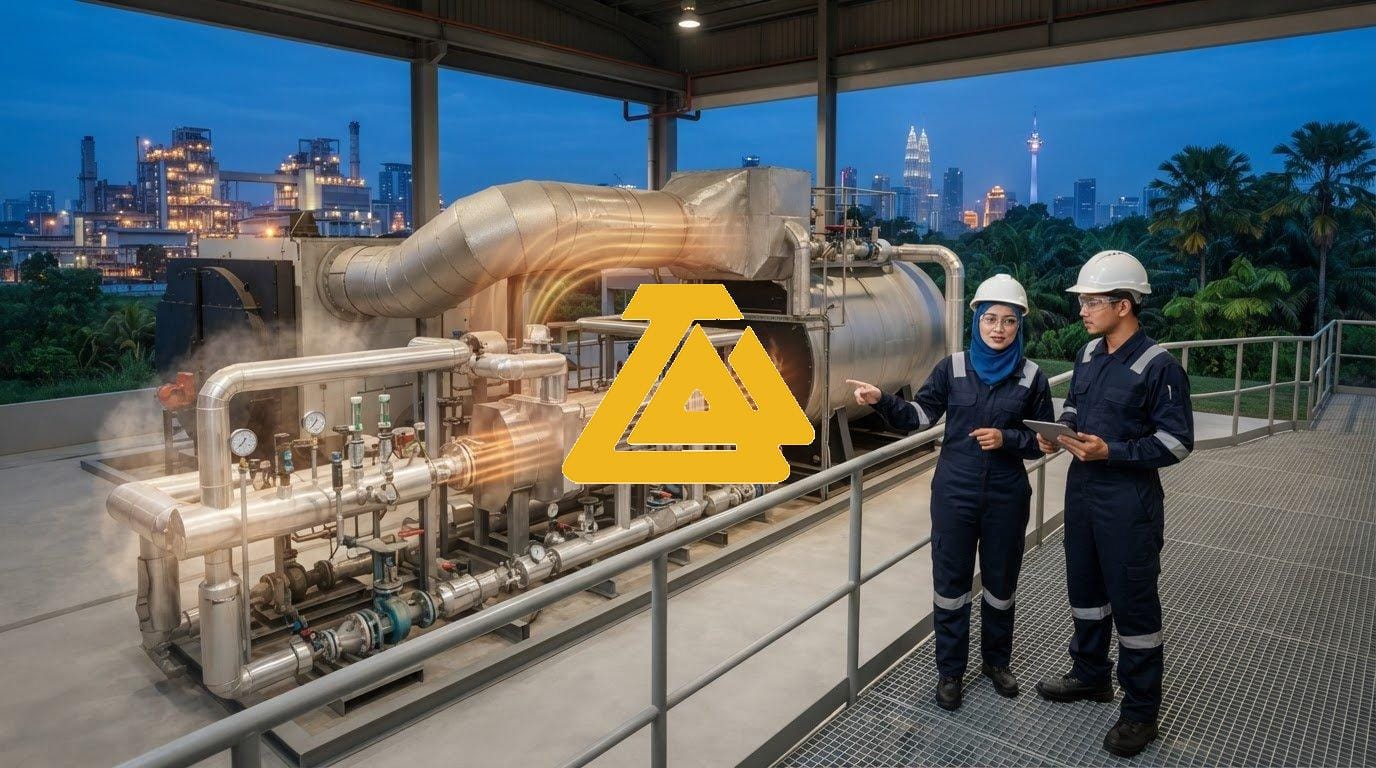
Treating industrial waste heat recovery as a routine equipment purchase is one of the costliest engineering miscalculations a plant manager can make. Across Selangor industrial corridors, venting exhaust streams at temperatures up to 450 degrees Celsius wastes usable thermal energy every operating hour. You already know that escalating fuel and electricity tariffs erode operating margins, but installing an improperly sized heat exchanger creates dangerous flue gas backpressure that can compromise your boiler or turbine operations. Securing a qualified waste heat recovery unit supplier Shah Alam plants can depend on requires finding a technical partner who prioritizes thermodynamic matching rather than off-the-shelf equipment sales.
This 2026 procurement guide explains how to accurately evaluate, specify, and commission industrial heat recovery systems built for demanding manufacturing environments. Drawing on practical engineering insights from Totalmas, we outline how to balance heat capture against flue gas draft limits, integrate complementary flow instrumentation, and ensure dependable long-term field support. Whether your facility operates in Section 15 or Bukit Jelutong, learn how to secure reliable component delivery and comprehensive technical assistance covering Peninsular Malaysia and East Malaysia, including Sabah and Sarawak.
Key Takeaways
- Assess factory flue gas chemistry and draft limitations to prevent dew point corrosion and upstream combustion backpressure.
- Select an experienced waste heat recovery unit supplier Shah Alam operators trust to ensure precise thermodynamic matching for boiler and turbine exhausts.
- Compare process requirements between downstream petrochemical utilities and palm oil refinery boilers to determine optimal heat exchanger metallurgy.
- Leverage complete system instrumentation, including precision flow meters and ANSI or API centrifugal pumps, to monitor thermal recovery efficiency.
- Verify nationwide vendor logistics to secure fast shipping and ongoing technical support across Peninsular Malaysia and East Malaysia, including Sabah and Sarawak.
Evaluating Waste Heat Recovery Units for Shah Alam Industrial Plants
A waste heat recovery unit (WHRU) functions as an energy scavenging heat exchanger that transfers sensible heat from hot exhaust gases to an adjacent utility fluid, such as boiler feed water, thermal oil, or process air. In continuous manufacturing operations, thermal energy generated during primary fuel combustion frequently bypasses production cycles entirely. Capturing these losses requires matching the thermodynamic enthalpy of the flue stream with the plant’s operational heat sink requirements rather than merely installing generic heat transfer surfaces.
Operating a manufacturing site in central Selangor involves stringent production schedules and substantial thermal utility demands. Partnering with a specialized waste heat recovery unit supplier Shah Alam engineers can rely on ensures that thermodynamic evaluations consider practical factory constraints, from localized flue stack configurations to municipal zoning pressures.
Thermal Waste Profiles Across Selangor Manufacturing Hubs
Industrial facilities across Section 15, Bukit Jelutong, and Kota Kemuning maintain heavy utility operations. In these manufacturing pockets, industrial boilers, drying furnaces, and power-generating gas turbines continuously vent exhaust streams exceeding 200 degrees Celsius, and often up to 450 degrees Celsius. For downstream palm oil fractionation facilities and chemical batch plants, unrecovered stack heat represents lost utility steam. Capturing this wasted thermal gradient through a dedicated recovery unit generates low-pressure saturated steam or high-temperature hot water directly on-site, offsetting fossil fuel consumption in primary burners.
Operational Benefits of Dedicated WHRU retrofits
Retrofitted heat recovery skids deliver clear, tangible improvements to continuous manufacturing processes. Key operational benefits include:
- Elevated Boiler Efficiency: Diverting scavenged exhaust heat into boiler economizers raises feed water temperature. Every 6 degrees Celsius increase in feed water temperature reduces boiler fuel consumption by approximately 1%.
- Preheated Combustion Air: Using recuperators to raise incoming air temperatures accelerates combustion kinetics, yielding direct natural gas savings across 24-hour cycles.
- Reduced Environmental Footprint: Lowering stack exit temperatures reduces the thermal load discharged into surrounding municipal estates, aiding compliance with local industrial environmental standards.
Consulting with established engineering specialists like Totalmas allows plant operators to accurately calculate these thermal balances before fabrication begins, securing durable efficiency gains across both Peninsular Malaysia and East Malaysia.
Key Engineering Criteria When Selecting a WHRU Supplier
Specifying a thermal recovery system requires balancing energy scavenging against upstream combustion aerodynamics. Installing an undersized unit restricts flue gas flow, creating dangerous backpressure that strains forced draft fans and causes boiler flame instability. Conversely, an oversized unit drops flue gas exit temperatures below the acid dew point, causing sulfuric acid condensation that rapidly eats through carbon steel casing. Selecting an accomplished waste heat recovery unit supplier Shah Alam factory teams can consult ensures these thermodynamic boundaries are rigorously calculated prior to procurement.
Thermodynamic Sizing and Flue Gas Compatibility
Evaluating recovery potential begins with accurate mass flow rate calculations and precise temperature readings in degrees Celsius. Combustion flues in heavy processing plants rarely carry clean air; they carry complex chemical streams. In palm oil processing, biomass boiler exhausts carry fly ash, unburned fiber, and abrasive particulates that quickly foul tight finned-tube bundles. A qualified vendor evaluates these fouling factors to select appropriate tube pitch spacings, soot blower access points, or bare-tube configurations that maintain thermal transfer rates without choking the exhaust draft.
Metallurgical Integrity and Corrosion Resistance
Exhaust chemistry dictates equipment metallurgy. When sulfur compounds combine with moisture in cooling exhaust streams, acid dew point corrosion threatens structural components. Factory managers must assess whether a supplier provides:
- Corrosion-Resistant Alloys: Utilizing grade 316L stainless steel, duplex alloys, or corten steel for tube bundles and casing sections exposed to corrosive condensates.
- Thermal Cycling Endurance: Structural expansion joints engineered to handle repeated thermal shock during startup and sudden plant shutdowns.
- Robust Joint Welds: High-integrity tube-to-tubesheet seal welds tested under hydrostatic pressure to prevent lethal cross-contamination between hot flue gas and pressurized boiler feed lines.
Instrumentation Integration and Control Automation
A high-performance heat recovery skid relies entirely on precision instrumentation to protect its physical core. Industrial pressure transmitters placed across the heat exchanger inlet and outlet continuously monitor differential pressure, alerting control room operators to fly ash buildup before dangerous backpressure develops. At the same time, high-accuracy flow meters track thermal fluid velocities, verifying real-time kilowatt scavenging and signaling bypass dampers to open during peak boiler firing states.
Engineering teams looking to align complex ducting parameters with certified process monitoring can consult Totalmas for comprehensive equipment integration, ensuring rapid component distribution and technical support across Peninsular Malaysia and East Malaysia, including Sabah and Sarawak.
Industrial Applications in Malaysia: Oil & Gas and Palm Oil Processing
Thermal utility requirements vary significantly between hydrocarbon processing and agribusiness manufacturing across Malaysia. Downstream oil and gas plants demand equipment that handles high-pressure, clean gaseous exhausts while meeting rigorous safety codes. Conversely, palm oil processing plants run on heavy biomass combustion, producing abrasive, soot-laden flues. Sourcing through an established waste heat recovery unit supplier Shah Alam engineers respect guarantees equipment configurations designed for these contrasting operating environments.
Waste Heat Recovery in Palm Oil Refining and Oleochemicals
Palm oil refineries and oleochemical facilities consume substantial low-pressure process steam during fractionation, fatty acid distillation, and deodorization. Biomass-fired boilers combusting palm kernel shells and mesocarp fiber vent exhaust gases between 220 and 320 degrees Celsius. Integrating a dedicated recovery unit allows processors to convert this dirty flue gas into low-pressure saturated steam or high-temperature thermal oil. For a deeper breakdown of system integration across local agribusiness facilities, review our detailed guide on waste heat recovery unit Malaysia applications.
Operating heat recovery equipment on biomass flues requires managing continuous particulate fallout. Without robust engineering provisions, fly ash accumulates rapidly on heat transfer surfaces:
- Abrasive Ash Mitigation: Utilizing hardened bare-tube configurations or wide-pitch finning prevents particulate bridging and erosive tube thinning.
- Automated Soot Blowing: Integrating acoustic horns or timed steam lances dislodges ash cake deposits without halting continuous 24-hour plant operations.
- Thermal Fluid Circulation: Reheating thermal oil loops through scavenged flue heat minimizes supplementary gas firing in oleochemical deodorization columns.
Thermal Capture in Downstream Oil and Gas Operations
Petrochemical complexes and gas processing facilities present different technical challenges, focusing on high temperatures and hazardous zone classifications. Gas turbine exhaust streams frequently exceed 450 degrees Celsius, offering high thermodynamic exergy. Capturing this exhaust energy through a closed-loop heat recovery skid can power secondary organic Rankine cycles or preheat process feeds, significantly cutting plant fuel consumption.
Safety and containment dominate engineering specifications in downstream hydrocarbon environments. Skids installed in classified zones require explosion-proof junction boxes and certified field instruments. Thermal loops must integrate heavy-duty API centrifugal pumps for fluid circulation, paired with precision orifice plates and flow meters to verify system heat transfer. Totalmas supplies these complementary instrumentation packages alongside industrial recovery hardware, backed by fast shipping and technical support covering Peninsular Malaysia and East Malaysia, including Sabah and Sarawak.

Procurement Logistics and Technical Consultation in Shah Alam
Executing an industrial retrofit demands precise mechanical planning and dependable component logistics. Unlike greenfield installations where space is abundant, established plants across Selangor face cramped layouts and complex existing pipe racks. Selecting an experienced waste heat recovery unit supplier Shah Alam factory engineers trust means working with a team that provides on-site engineering assessments, accurately bridging the physical gap between your current exhaust stack and the recovery skid.
On-Site Engineering Assessment and Consultation
Procurement must always begin with direct physical measurements rather than theoretical datasheets. Experienced engineers inspect the plant floor to evaluate duct structural integrity, static pressure losses, and spatial limits near existing boiler runs. Key assessment steps include:
- Velocity and Flow Characterization: Measuring actual flue duct velocities and thermal gradients in degrees Celsius across variable burner modulation rates.
- Ductwork Layout and Routing: Evaluating structural support beams and bypass damper clearances within tight factory envelopes.
- Mechanical Tie-In Verification: Specifying exact flange dimensions, transition pieces, and expansion joints to guarantee leak-free integration with plant utility piping.
Conducting these preliminary evaluations eliminates costly mid-installation pipe rework and unexpected plant downtime during scheduled turnarounds.
Nationwide Delivery and Engineering Support Network
Logistical dependability is just as critical as thermal design. From central Klang Valley distribution hubs, standard replacement parts, valves, and monitoring instrumentation reach Shah Alam manufacturing zones quickly, minimizing turnaround windows. This regional accessibility protects continuous production facilities from lengthy mechanical interruptions.
Operational support extends well beyond central Selangor. Industrial conglomerates frequently operate processing branches across both Peninsular Malaysia and East Malaysia. Totalmas backs its recovery hardware with comprehensive technical support and fast shipping covering Sabah and Sarawak. Whether your facility is an edible oil refinery in Sandakan, an oleochemical processing plant in Bintulu, or a chemical factory in Shah Alam, engineering specialists coordinate component delivery, commissioning supervision, and ongoing maintenance guidance nationwide.
Ready to upgrade your plant’s thermal efficiency? Schedule a technical consultation with Totalmas to evaluate your flue exhaust parameters and discuss skid specifications.
Totalmas: Trusted Industrial Equipment and WHRU Supplier
Establishing an efficient thermal recovery loop requires a reliable supply chain partner with broad engineering expertise. Based in Kuala Lumpur and actively serving manufacturing hubs nationwide, Totalmas brings over 33 years of engineering distribution experience since 1991. The company acts as a dedicated technical partner rather than an equipment catalog, helping factory teams calculate precise thermodynamic balances and select equipment matched to complex process parameters. For facilities searching for a waste heat recovery unit supplier Shah Alam engineers can rely on, this multi-decade foundation ensures dependable system design and long-term operating security.
Comprehensive Industrial Equipment Portfolio
A functional heat recovery project extends beyond the core exchanger skid. It requires complete fluid circulation and process monitoring hardware to maintain safe operating parameters under varying thermal loads. Engineering teams can consult with Totalmas to source unified equipment packages from a single supplier:
- Precision Instrumentation: In-line flow meters and differential pressure transmitters designed to monitor thermal fluid velocity and detect early tube fouling.
- Industrial Centrifugal Pumps: Heavy-duty ANSI and API centrifugal pumps specified to circulate high-temperature thermal fluids, boiler feedwater, and corrosive condensates.
- Combustion Displays and Controls: Enovation Controls and Murphy displays to centralize thermal metrics and manage automated stack bypass systems.
- Process Piping Hardware: Flanges and orifice plates built to withstand rigorous industrial temperature cycling and high static pressures.
Engineering Support and Long-Term Partnership
Sustained thermal savings depend on responsive post-procurement technical assistance. Totalmas maintains a nationwide engineering support network designed to minimize downtime during both scheduled turnarounds and sudden plant interruptions. Centrally located distribution hubs ensure fast shipping for replacement components and process instruments directly to industrial estates throughout Selangor.
This technical infrastructure reaches operations far beyond central industrial hubs. Dedicated technical support covers manufacturing facilities across both Peninsular Malaysia and East Malaysia, with prompt service for processing sites located in Sabah and Sarawak. By linking complete process instrumentation portfolios with experienced technical consultation, Totalmas provides Malaysian factory managers with an authoritative, single-source procurement path for industrial thermal recovery.
Modernize Your Plant Thermal Efficiency with Proven Engineering Partners
Sustained reductions in industrial fuel consumption depend on exact thermodynamic matching rather than off-the-shelf equipment procurement. As utility tariffs evolve across Selangor, evaluating flue gas chemistry, preventing severe backpressure, and selecting corrosion-resistant alloys remain essential steps for long-term plant reliability. Choosing an experienced waste heat recovery unit supplier Shah Alam plant managers depend on ensures your facility captures high-enthalpy energy without jeopardizing core boiler or turbine operations.
With over 33 years of engineering distribution experience since 1991, Totalmas delivers complete thermal recovery solutions backed by precision flow meters, pressure transmitters, and heavy-duty centrifugal pumps. Our responsive logistics network ensures fast shipping and dependable on-site technical support across Peninsular Malaysia and East Malaysia, including Sabah and Sarawak. Consult with Totalmas engineering specialists today to evaluate your exhaust parameters, protect your mechanical assets, and achieve measurable thermal savings across every production cycle.
Frequently Asked Questions
How does an industrial waste heat recovery unit operate in a manufacturing plant?
An industrial waste heat recovery unit captures thermal energy from hot exhaust flues and transfers it through a dedicated heat exchanger to a utility fluid. The captured heat is directed to preheat boiler feedwater, generate process steam, or raise thermal oil temperatures. By scavenging heat that would otherwise vent into the atmosphere, the unit reduces primary burner fuel consumption while lowering plant operating costs.
What exhaust temperature is required to make a WHRU economically viable?
Exhaust streams exceeding 200 degrees Celsius generally deliver strong economic viability for industrial facilities. High-temperature flue gases from industrial furnaces or gas turbines operating between 300 and 450 degrees Celsius provide rapid payback through high-enthalpy steam recovery. Low-grade thermal exhaust down to 150 degrees Celsius can also be recycled effectively for boiler feed preheating if continuous flue gas mass flow rates remain sufficiently high.
Can a WHRU be retrofitted onto an existing industrial boiler in Shah Alam?
Boiler retrofits are common across Selangor manufacturing plants, provided ductwork structural integrity and combustion draft fans can support the installation. Working with an experienced waste heat recovery unit supplier Shah Alam facilities rely on ensures proper physical duct routing and pressure drop calculations. Engineers design bypass dampers and transition spools to integrate the unit seamlessly without interrupting standard boiler safety functions.
How do engineers prevent flue gas backpressure issues when installing a WHRU?
Engineers calculate flue gas velocity and static pressure loss across heat exchanger tube bundles to prevent backpressure spikes. The system must operate within the static pressure limits of existing forced or induced draft blowers. Integrating an automated modulating bypass damper allows flue gases to divert around the heat exchanger during peak firing states or unexpected downstream tube restrictions.
What maintenance is required to prevent tube fouling in palm oil biomass boilers?
Biomass boiler flues carry heavy loads of fly ash and unburned palm fiber, requiring continuous soot-blowing mechanisms like acoustic cleaners or timed steam lances. Operators must monitor differential pressure across tube banks to catch fouling early. Scheduled turnarounds should include physical duct inspections, soot removal, and checks on bare-tube surfaces to verify that abrasive ash hasn’t thinned heat transfer walls.
Does Totalmas supply waste heat recovery equipment to Sabah and Sarawak?
Totalmas supplies industrial heat recovery equipment, pumps, and process instrumentation across Peninsular Malaysia and East Malaysia, with dedicated technical support covering Sabah and Sarawak. With over 33 years of engineering distribution experience since 1991, Totalmas coordinates fast shipping of replacement parts and hardware alongside engineering consultation to ensure continuous operating reliability for remote agribusiness and petrochemical facilities nationwide.
How do precision flow meters assist in monitoring waste heat recovery efficiency?
Precision flow meters measure fluid mass flow rates through recovery circuits, allowing plant automation systems to calculate real-time kilowatt capture when paired with temperature sensors. Engaging a knowledgeable waste heat recovery unit supplier Shah Alam engineers trust ensures that flow meters, orifice plates, and pressure transmitters are properly calibrated. This instrumentation confirms energy savings and detects tube fouling before efficiency drops.