
What changes when an operator can see engine conditions and alerts clearly, without piecing together information from separate gauges? For factory managers in Malaysia’s oil and gas and palm oil sectors, the benefits of digital engine control panels can start with making operating information easier to access and interpret. That visibility may support timely decisions, but the right solution depends on the engine, application and existing controls.
Whether an upgrade is worthwhile depends on the problem it is meant to solve. A digital display may make selected readings easier to review, but it does not necessarily add monitoring functions or change how the engine is controlled. This guide explains what to compare with your current arrangement, including compatibility, integration, installation scope and operator needs.
Totalmas Sdn Bhd supplies Enovation Controls / Murphy Displays in Malaysia. Use the guidance below to prepare for a supplier discussion and identify the technical details that need confirmation for your application.
Key Takeaways
- Distinguish the digital display interface from the wider engine control and monitoring system before evaluating an upgrade.
- The benefits of digital engine control panels may include clearer operating information and more informed routine checks, but they do not guarantee uptime or savings.
- Compare a digital panel with the existing arrangement by information presentation, operator interaction, integration needs and confirmed compatibility.
- Assess how site conditions, operator practices and equipment configuration affect suitability in Malaysian oil and gas and palm oil operations.
- Prepare engine and application details before discussing Enovation Controls / Murphy Displays with Totalmas.
What Are Digital Engine Control Panels and What Do They Show?
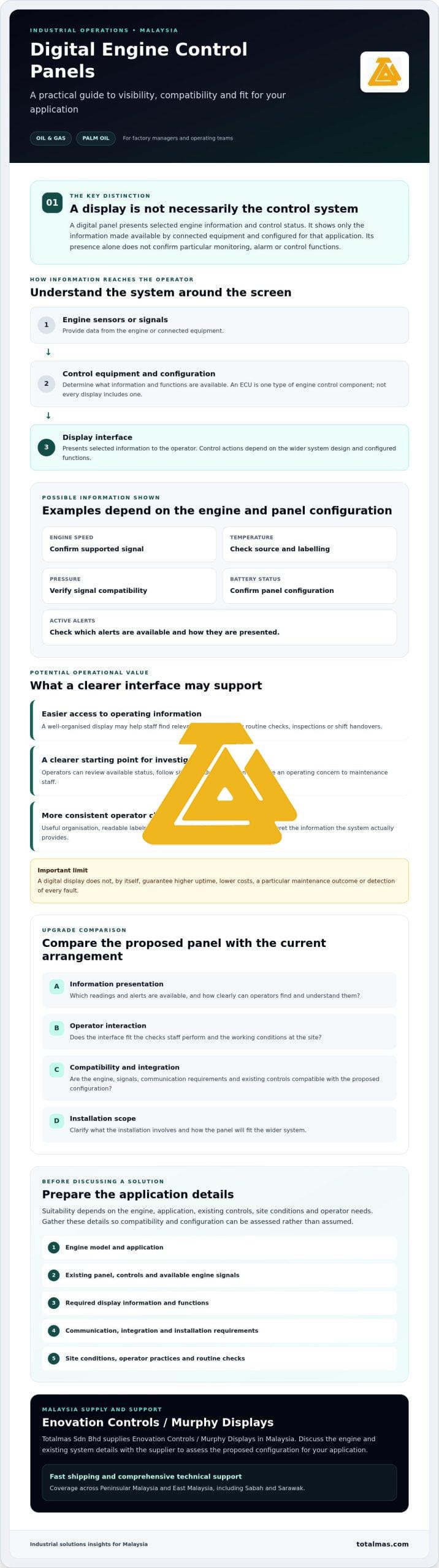
A digital engine control panel is an operator interface that presents selected engine information and control status on a display. It can bring available operating data into one view, but it is not necessarily the controller itself. The display may be one part of a wider system that includes engine sensors, control equipment and other monitoring components.
This distinction matters when assessing the benefits of digital engine control panels. A display can show only the information made available by connected equipment and configured for that application. Its presence alone does not confirm that the engine has particular monitoring, alarm or control functions.
Which engine information can a digital panel present?
Depending on the engine and panel configuration, examples may include engine speed, temperature, pressure, battery status or active alerts. These readings are not standard across every panel. Confirm which parameters are supported, how they are labelled and whether readings come from compatible engine signals or sensors.
For routine checks at a palm oil mill or oil and gas facility, a clear display may help operators identify the information available and review operating status consistently. Readability and useful organisation matter when staff need to assess the engine promptly. Check the configuration against the tasks operators perform and the information they need to see.
How does a panel fit into an engine monitoring system?
In a typical arrangement, sensors or other engine signals provide data to control equipment. The display presents selected information to the operator, while any control actions depend on the wider system design and the functions configured for that equipment. An Engine Control Unit (ECU) is one type of engine control component. Do not assume every digital display includes an ECU or performs the same role.
The interface does not replace suitable engineering design, maintenance procedures or checks of the engine and connected equipment. Before selecting a panel, confirm the engine model, available signals, required display functions, communication requirements and integration approach with a supplier or qualified technical team. For guidance specific to Murphy displays, see the Murphy PowerView display integration guide.
Totalmas supplies Enovation Controls / Murphy Displays. When discussing a potential fit, share the engine and existing system details so the proposed configuration can be assessed against the application, rather than relying on assumed features.
Benefits of Digital Engine Control Panels for Plant Operations
The practical benefits of digital engine control panels depend on what the panel can display and how operators use that information. In a palm oil mill or oil and gas facility, consolidated readings may help staff carry out routine checks, communicate an operating concern and decide what to investigate next. A display does not, by itself, guarantee higher uptime, lower costs or a particular maintenance outcome.
Improve visibility and operator awareness
A well-organised display may make relevant engine status easier to identify during a shift handover or inspection. For example, if the configuration presents selected operating readings and alerts together, an operator can review the available information before escalating a concern or following site procedures. The value is in helping the operator interpret status, not in assuming the display detects every fault.
Assess readability and information priority against actual working conditions. Can staff locate the readings they need? Are the labels understandable to intended users? Are the most important details easy to distinguish from less relevant information? These are practical selection questions, not features to assume. Usefulness also depends on correct configuration, reliable input signals and operator familiarity with the interface.
Support monitoring and maintenance workflows
Accessible information can give operators and maintenance personnel a clearer starting point for inspections and troubleshooting discussions. A team might note a displayed reading during a check, compare it with the relevant operating context and pass the information to maintenance staff. If the system supports suitable records, those details may also help document observations. Confirm logging and data access capabilities for the specific panel, as they are not universal.
Monitoring support should not be confused with predictive maintenance. A display may show selected information, but predicting equipment faults requires verified system capabilities and an appropriate maintenance approach. Establish what the panel measures or receives, what it communicates and how staff are expected to respond.
Digital presentation can make relevant engine information easier to interpret, supporting more informed operator decisions. For a broader market perspective, The Business Research Company’s digital engine control system market report provides sector context, but it does not verify the functions of any particular panel.
Totalmas supplies Enovation Controls / Murphy Displays. Malaysian factory teams can review the company’s industrial solutions and discuss application requirements for these products.
Digital and Existing Engine Panels: What Changes and What Does Not?
Replacing an existing engine panel can change how information is presented and how operators interact with it. It does not automatically change the engine’s control architecture, add monitoring functions or make the overall system more reliable. The benefits of digital engine control panels depend on the selected configuration and its fit with the equipment and site workflow.
| Assessment area | What may change | What to check |
|---|---|---|
| Information presentation | Readings may be arranged on a digital display instead of presented through existing gauges or indicators. | Which readings are available, and are they clear and relevant to operators? |
| Operator interaction | The interface may provide a different way to view status or access configured functions. | Which actions are supported, and how will staff learn and use them? |
| Integration needs | A replacement display may need to connect with existing engine signals and control equipment. | Are the signals, power requirements and interfaces compatible? |
| System capability | A new display may improve information presentation. | Does the wider control system also need changes, and who will confirm the scope? |
A display replacement alone does not necessarily modernise the full control system. The controller, sensors, wiring, alarm logic and data connections may remain unchanged, depending on the project. Treat improved readability or easier access to information as potential advantages. Reliability, additional functions and operational outcomes require a site-specific assessment and supplier confirmation.
When might an upgrade be worth evaluating?
Consider an assessment if operators struggle to read existing information, regularly need to consult several indicators or have changing monitoring and maintenance workflows. Start by documenting what staff check during start-up, routine rounds, shift handovers and fault investigation. This gives engineers a practical basis for comparing options instead of starting with a product specification alone.
What compatibility questions should engineers ask?
Prepare the engine make and model, existing panel details, available signals, power requirements, site conditions and any interfaces or connected equipment. Ask the supplier to verify the functions of the exact engine and panel configuration, including installation and integration requirements. For related instrumentation considerations, consult the high-temperature pressure transmitter guide.
Equipment configuration and operating conditions vary by site, including across oil and gas and palm oil facilities in Malaysia. Confirm the technical requirements for your application with the supplier before selecting a configuration.
Assessing Digital Engine Control Panels in Malaysian Oil and Gas and Palm Oil Operations
Panel suitability depends on more than the display itself. In Malaysian oil and gas and palm oil facilities, engine operators and maintenance teams may use the same information for different tasks, such as routine checks, shift handovers or investigating an operating concern. Site conditions, operator practices and the existing engine configuration all affect which display and functions are appropriate. Assess the application before deciding whether an upgrade fits.
Questions for oil and gas and palm oil site teams
Start by identifying who will use the panel and what they need to do with its information. Record when operators refer to it, which readings or status details they need, and what decisions depend on those details. Also document the engine and existing control arrangement, the available signals, the panel location and relevant site conditions for technical review.
Separate confirmed requirements from assumptions. A team may know that operators need clearer access to certain readings but still need engineering review to confirm whether the engine can provide those signals or whether a proposed panel supports them. This distinction keeps selection discussions practical and prevents unverified functions from being treated as requirements.
Plan technical evaluation for your application
Use a structured review before selecting a configuration:
- 1. Document operating needs. List users, routine tasks, information requirements and current difficulties.
- 2. Record existing equipment. Gather engine and panel details, available signals, power requirements, interfaces and relevant site conditions.
- 3. Confirm the configuration. Ask the supplier to verify compatibility and the functions supported for the specific engine and panel combination.
- 4. Agree the project scope. Clarify integration requirements, who is responsible for engineering review and commissioning, and what documentation will be provided.
- 5. Confirm support arrangements. Discuss what technical support is available for the particular site and equipment.
The benefits of digital engine control panels are most relevant when the selected configuration addresses a defined operational need. Before making a decision, prepare the engine and site details and confirm the proposed functions and project scope for your application.
Discuss your Enovation Controls / Murphy Displays requirements with Totalmas and prepare the engine and site details for a focused technical review.
Selecting a Digital Engine Control Panel and Getting the Right Support
A sound selection process starts with the engine and the work operators need to perform, not with a model name. The benefits of digital engine control panels depend on choosing a configuration that suits the application and confirming what it can display or control. For Malaysian oil and gas and palm oil operations, a clear technical brief can help the supplier and site team assess fit before proceeding.
Prepare an engine control panel enquiry
Gather the information available about the engine and its existing control arrangement. A useful enquiry may include:
- Engine make, model and identification details.
- Existing panel details, photographs and system diagrams, where available.
- Known signals, power requirements and connected equipment.
- Site operating conditions relevant to panel selection.
- The readings, alerts or status information operators need to access, and when they use it.
Be clear about what is confirmed and what remains unknown. For example, the team may have identified a need to view particular engine information but still need to verify whether the engine provides the necessary signals. Ask the supplier how open questions will be checked and what information or engineering review is needed before a configuration is selected.
Work with a supplier on fit and implementation
Once the application details are available, use a structured review to move from requirements to a proposal:
- Confirm compatibility. Verify the proposed panel against the exact engine, available signals and existing equipment.
- Compare configurations. Check which information and functions are supported, and how the arrangement meets operator needs.
- Agree implementation scope. Clarify integration requirements, commissioning responsibilities and the technical documentation to be provided.
- Confirm support arrangements. Discuss the technical support relevant to the site and application.
An application-specific discussion can help establish what is compatible, what needs further verification and what the project requires. Confirm the proposed configuration and implementation responsibilities before proceeding.
Make Your Next Panel Decision with Confidence
The benefits of digital engine control panels depend on whether the selected display presents information operators need and suits the existing engine and control arrangement. Clearer information may support routine checks and operational decisions, but a new display alone does not guarantee improved reliability or change the wider control system.
For oil and gas and palm oil facilities, begin with the application. Document operator needs, engine details and existing signals, then confirm compatibility, configuration and implementation responsibilities with a supplier. Check that proposed functions are verified for the specific equipment rather than assumed from the display type.
Contact Totalmas to discuss your engine control panel requirements and share the details needed to assess your application.
Frequently Asked Questions
What are the main benefits of digital engine control panels?
The main benefits of digital engine control panels may include clearer access to engine information, improved operator awareness and support for routine checks. A configured display might bring selected readings or status details together, helping an operator review information during a shift or inspection. The actual value depends on available engine signals, panel configuration and how staff use the information. Confirm supported functions for the specific application rather than assuming they are standard.
Are digital engine control panels better than conventional panels?
Not necessarily. A digital panel can present information differently and may offer an interface better suited to particular operator needs, but it is not automatically the right choice for every installation. Compare readability, required information, compatibility with existing equipment, site conditions and support requirements. First identify a specific operational issue, such as difficulty reading current indicators, then ask a technical supplier to assess whether a proposed panel addresses it.
Can a digital engine control panel improve engine reliability?
A digital panel may help operators access relevant information and respond to changes, but the display alone does not guarantee improved reliability or prevent equipment failure. Reliability also depends on the wider engine system, correct configuration, maintenance practices and appropriate operator response. Ask the supplier to distinguish verified functions of the proposed panel from outcomes that depend on site conditions, engineering decisions and ongoing maintenance.
What should I check before replacing an engine control panel?
Record the engine identification, existing panel and control-system details, available signals, power requirements, installation conditions and information operators need to view. Gather system diagrams or photographs if available. Then ask a qualified supplier to verify compatibility, supported functions, integration requirements and commissioning responsibilities for the exact configuration. Do not assume a replacement display will work with existing equipment until the technical details have been reviewed.
Are digital engine control panels suitable for oil and gas or palm oil facilities?
They may be suitable for either sector, but the right choice depends on the engine, site conditions, operator tasks and panel configuration. An oil and gas facility and a palm oil mill may have different equipment arrangements and monitoring needs, so assess each application on its own. Ask the supplier to verify relevant environmental and integration requirements, and request documentation for any claimed equipment rating or sector approval.
Do digital engine control panels reduce maintenance costs?
Not necessarily. A panel may support monitoring and maintenance communication by making selected information easier to access, but cost reductions are not guaranteed. Results depend on the existing system, maintenance approach, panel configuration and operating conditions. Before an upgrade, document current maintenance practices and establish measurable objectives with engineering and maintenance teams. This provides a basis for assessing any changes without attributing savings to the display alone.
Where can Malaysian businesses get support for engine control panels?
Totalmas Sdn Bhd supplies Enovation Controls / Murphy Displays in Malaysia. Contact the supplier with your engine and existing panel details to discuss application fit and confirm what technical support is available for your enquiry.