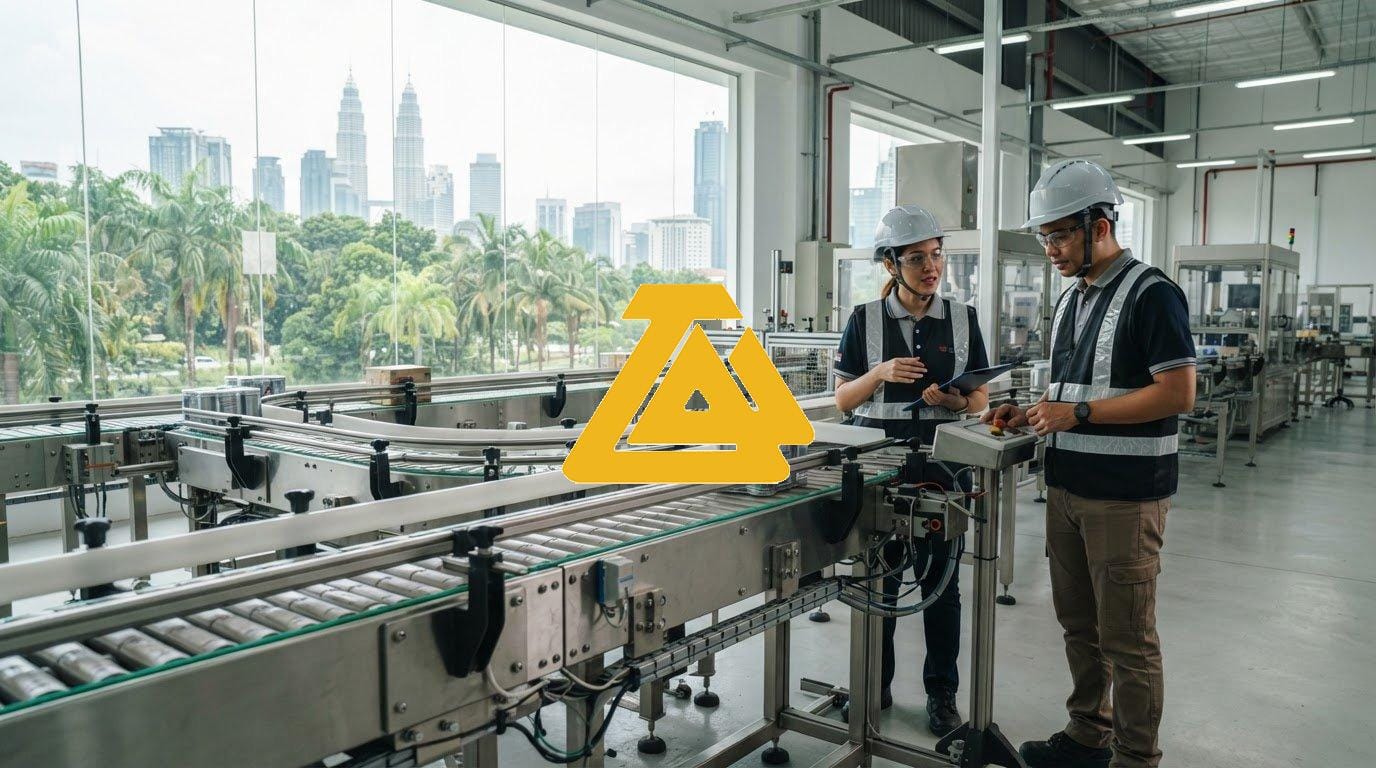
What if the conveyor that fits the equipment list still fails to support production flow? Choosing a conveyor system for manufacturing plant operations starts with the material being moved, the route it must follow and the conditions on the factory floor, not simply the equipment type. A mismatch can disrupt established routines, whether a plant handles wet, oily materials in palm oil processing or manages material flow within an oil and gas operation.
For Malaysian factory managers, comparing proposals is difficult when requirements are unclear. Define the application first, then assess system options against process needs, plant layout and daily operation. This guide explains which requirements to establish, what to compare and how to plan a solution suited to local operating conditions.
It also covers practical procurement and project-planning considerations for plants across Malaysia. Totalmas supplies Mec Handling conveyors. Use this guide, alongside insights from Totalmas on industrial solutions in Malaysia, to approach conveyor procurement with a clearer understanding of the decisions ahead.
Key Takeaways
- Define the material, movement volume, route, transfer points and process conditions before comparing a conveyor system for manufacturing plant operations.
- Compare belt, modular-belt and chain configurations against the application, material, route, environment and integration needs rather than choosing by type alone.
- Plan for site access, equipment interfaces, installation sequence and commissioning responsibilities to support an orderly project.
- Include operator access, inspection needs and maintenance planning when assessing long-term conveyor operation.
- Totalmas supplies Mec Handling conveyors for industrial applications.
What a Conveyor System for a Manufacturing Plant Must Do
A conveyor system moves materials between process or handling points. In a plant, its job is not simply to transport items from one place to another. It must support the intended flow through connected operations, with a route and transfer points that fit the production process. The Conveyor system overview describes common conveyor types and their uses across industries. For procurement, the key question is how the equipment will serve your plant’s specific material flow.
A well-matched conveyor can help make material movement more consistent and support production planning. It does not remove the need for operators to manage, inspect or maintain equipment. Instead, it becomes part of the process: its position, interfaces and operating role should make sense alongside the equipment and tasks around it.
Where conveyors fit into manufacturing operations
Material may move from receiving to processing, then to storage, packing or dispatch. A conveyor can connect selected stages, but the route depends on the plant layout and where materials need to be transferred. Map how material enters and leaves each stage, where the route changes direction or level, and whether it intersects with work areas or other equipment. A manufacturing plant in Kuala Lumpur may have different space and movement constraints from a palm oil facility in Sabah or Sarawak. Do not assume one standard arrangement fits every site.
This connected role distinguishes a plant conveyor from standalone equipment. A standalone unit may perform a discrete handling task; a conveyor within a production process must also align with upstream and downstream operations. If a transfer point interrupts flow or the route conflicts with routine work, the equipment may not serve its intended purpose, even if it moves material effectively on its own.
Why material and industry context matter
Selection begins with what the conveyor will move and the conditions it will encounter. Material form, handling needs, movement volume, route and process environment all affect suitability. These factors help define the required function before you compare configurations. Assess a conveyor system for manufacturing plant operations as part of the process it serves, rather than as an isolated purchase.
In palm oil operations, consider material movement in the context of the relevant processing and handling stages. The material and conditions at each point matter; the sector alone does not determine a conveyor design. Oil and gas plants also have varied operating contexts. Conveyors may be relevant where materials need to move between handling or process points, but the application and site requirements should guide the assessment. Totalmas supplies Mec Handling conveyors for Malaysian industrial customers evaluating material-handling needs.
How to Specify a Conveyor System for Your Manufacturing Plant
A clear specification turns production needs into criteria that can be compared across proposals. Before selecting a configuration, document what the conveyor must move, where it must travel, how it connects to existing operations and what production objective it needs to support. Keep measured plant data separate from estimates so decisions are not built on assumptions.
Document the material flow and plant layout
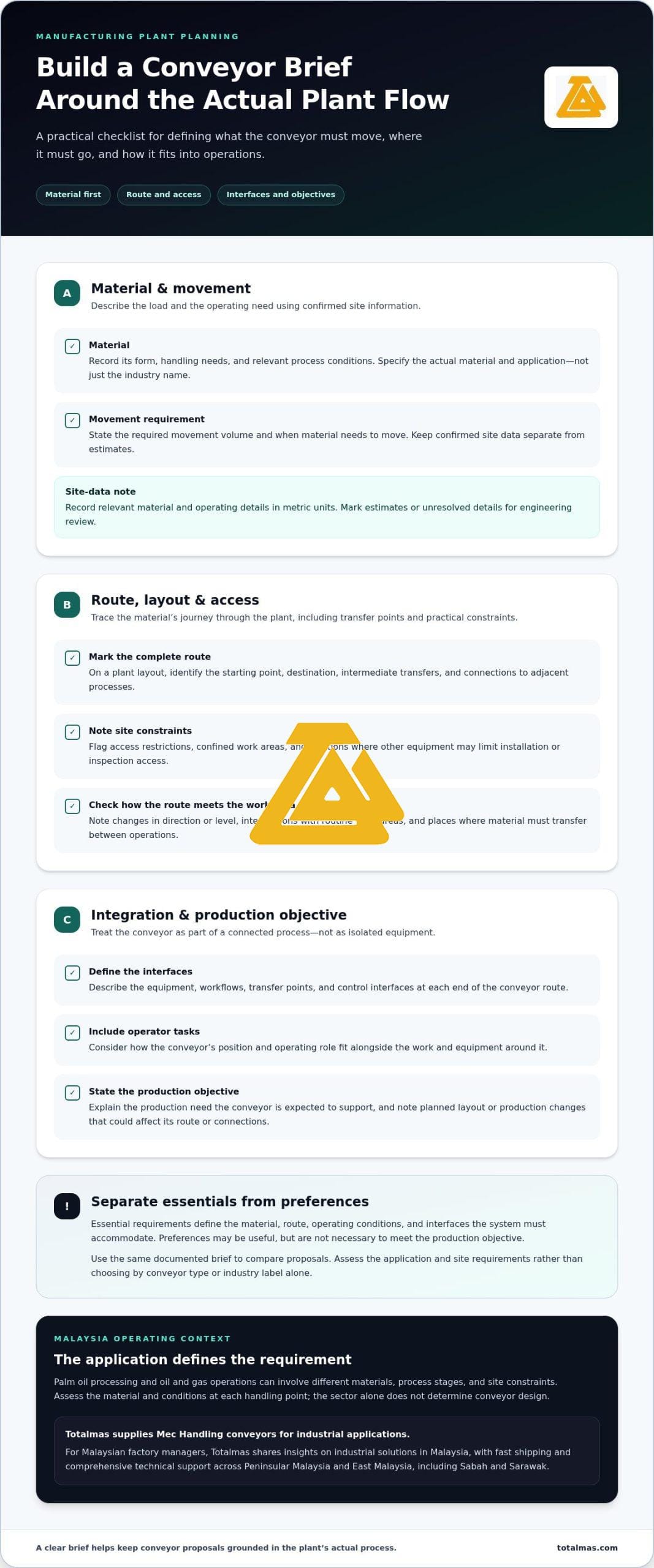
Start with a marked-up plant layout. Identify the material’s starting point, destination, intermediate transfer locations and connections to adjacent processes. Add the proposed route and note access restrictions, such as confined work areas or locations where other equipment may limit installation and inspection access.
Record material form and relevant handling characteristics using confirmed site data and metric units. Include movement volume and operating conditions that may affect handling. For example, a palm oil operation and an oil and gas facility can have different materials, process stages and site constraints. Describe the actual application rather than assuming the industry label defines the requirement.
Set operational and integration requirements
Define the production objective and operating pattern the system must accommodate. Then identify the equipment and workflows at each end of the conveyor route. Existing machinery, transfer points, control interfaces and operator tasks all affect how the conveyor needs to fit into the wider process. Note any planned production or layout changes that could influence the route or connection points.
Use this numbered process to organise the brief:
- 1. Material: Record form, handling needs and relevant process conditions.
- 2. Movement: State the required volume and when material needs to move.
- 3. Route: Mark the start, destination, transfers and access constraints on the layout.
- 4. Interfaces: Describe connections to existing equipment, controls and plant workflows.
- 5. Objective: Explain the production need the conveyor is expected to support.
Separate essential requirements from preferences. Essential requirements define the material, route, operating conditions and interfaces the system must accommodate. Preferences may include layout choices that are useful but not necessary to meet the production objective. Mark estimates or unresolved details for engineering review instead of presenting them as confirmed specifications. This gives the team a consistent basis for evaluating a conveyor system for manufacturing plant operations.
Include operator access, inspection points and maintenance needs in the specification. Account for applicable Malaysian workplace safety requirements and site procedures during project planning. For further insight into conveyor and industrial-equipment considerations in Malaysia, review Totalmas industrial solutions. Totalmas supplies Mec Handling conveyors for industrial applications.
Comparing Conveyor Configurations for Malaysian Manufacturing Plants
Belt, modular-belt and chain conveyors are useful comparison categories, not automatic recommendations. Start with the job to be done and check each configuration against the material, route, operating environment and connections to adjacent equipment. A conveyor system for manufacturing plant operations should fit the specified process, rather than being selected by category name alone.
Compare conveyor types against the application
Use the same questions for each option: Does its documented application fit the material and handling task? Can it follow the required route and work with the planned transfer points? How do its cleaning, exposure and integration needs align with the site? Use technical documentation to support the comparison, and do not assume performance or suitability from a general description.
| Configuration | Application fit to assess | Material and environment | Route and integration |
|---|---|---|---|
| Belt | What material and handling task is specified? | What exposure or cleaning conditions apply? | Does the documented configuration suit the route and transfer points? |
| Modular-belt | Does the application documentation match the process? | How do material handling and cleaning needs affect suitability? | How does the arrangement connect with existing equipment and workflows? |
| Chain | Is the option documented for the intended handling task? | What site conditions could affect operation or inspection? | Can it fit the proposed route and interfaces? |
The table helps expose trade-offs and unanswered questions. It does not establish a universal winner. Record the evidence and gaps for each option, then compare configurations supported by project requirements and available technical documentation.
Account for Malaysian sector and site conditions
Palm oil processing and oil and gas operations present distinct material-handling contexts. For a palm oil site, document the actual process stage, material and relevant exposure or cleaning needs. For an oil and gas facility, define the specific handling task and operating environment rather than treating the sector as a single application. In either case, consider site access for operation, inspection and maintenance as part of the assessment.
For broader context on moving materials through industrial processes, see Totalmas’s bulk material handling equipment guide. The Material Handling Industry (MHI) also provides general information about the material handling and supply chain sector. Totalmas supplies Mec Handling conveyors for industrial applications.
Planning Conveyor Installation, Support, and Long-Term Operation
Even a technically suitable conveyor needs a coordinated path from delivery to routine operation. Plan site preparation, equipment interfaces, installation sequence and commissioning responsibilities before the project begins. This helps factory teams identify dependencies early and account for practical needs such as access for inspection or maintenance.
Prepare the project for plant integration
Use the current plant layout to review the equipment route, delivery and access paths, work areas, and connections to adjacent machinery. Identify operational constraints that could affect the sequence of work, such as keeping nearby processes accessible. For a palm oil or oil and gas facility, assess actual site and process conditions rather than relying on general assumptions about the sector.
Bring engineering, operations, maintenance and procurement into the planning process. Each team can identify different requirements: engineering can document interfaces, operations can explain workflow constraints, maintenance can flag inspection access, and procurement can coordinate supply details. Record who is responsible for each project activity, including commissioning and handover. Set out these responsibilities in the project documentation rather than leaving them to assumption.
Discuss operator access and inspection needs during design planning. Identify the areas that require routine observation or maintenance, and ensure the proposed arrangement accounts for practical access. Define what information the operating team needs at handover, such as relevant equipment documentation and agreed operating or maintenance guidance. The project team should document these deliverables and responsibilities for the specific installation.
Plan support across Malaysia
Logistics planning matters for plants throughout Malaysia. Coordinate delivery around the project location, site access and the teams responsible for receiving and handling equipment. Include these details early in procurement planning, particularly when the operating site is in East Malaysia rather than Peninsular Malaysia.
For long-term operation, plan how the plant will manage inspection, maintenance needs, operating documentation and technical questions as they arise. Keep the relevant equipment information and agreed maintenance guidance accessible to the teams responsible for day-to-day operation.
For a conveyor system for manufacturing plant project, clear coordination links procurement decisions with site readiness and ongoing operation. Discuss Mec Handling conveyors with Totalmas as part of planning material handling for your Malaysian facility.
Selecting a Conveyor System Supplier for Your Manufacturing Plant
A supplier should be able to connect the proposed conveyor with the requirements documented for your plant. Assess technical fit, supporting information and coordination, not just the equipment category. Choosing a conveyor system for manufacturing plant operations is a procurement decision tied to material flow, layout, interfaces and ongoing operation.
Use a practical supplier evaluation framework
Use your project brief to guide supplier discussions. A clear conversation should address how the conveyor relates to the handling task, plant route and connections to adjacent processes. Review the information provided to understand the proposed scope and identify where technical details or responsibilities need clarification.
- Technical alignment: Does the discussion refer to your material, route, process conditions and integration needs?
- Documentation: Is the relevant technical information available to support internal review and project coordination?
- Communication: Are project requirements and responsibilities discussed clearly with the teams involved?
- Logistics: Does planning take the delivery location and site receiving arrangements into account?
- Post-supply support: Are technical questions and operating requirements included in project planning?
These points help factory managers compare proposals against the same criteria. Give particular attention to what is documented and what remains an assumption. A discussion grounded in the plant’s actual requirements is more useful than a broad performance claim that does not explain how it applies to the project.
How Totalmas supports Malaysian industrial buyers
Totalmas supplies Mec Handling conveyors for industrial applications in Malaysia. For buyers in palm oil processing or oil and gas, the project discussion should reflect the specific material-handling task and operating context, rather than treating either sector as one standard application. This keeps procurement focused on the plant’s documented requirements.
Consider logistics and technical requirements across Malaysia’s operating locations as part of procurement planning. Totalmas supplies Mec Handling conveyors, giving industrial buyers a local point of reference as they consider conveyor supply alongside broader plant requirements.
Totalmas is also a source of further insights on industrial solutions in Malaysia. Bring your material-flow needs and project requirements into the discussion to focus the evaluation on practical fit. Discuss your manufacturing conveyor requirements.
Move Forward with a Clear Conveyor Plan
A sound conveyor decision begins with the process, not a catalogue category. Define the material, route, transfer points and operating conditions, then compare belt, modular-belt and chain options against those requirements. Clear documentation also helps your team plan interfaces, site access, commissioning and ongoing maintenance.
For Malaysian plants, project fit includes the realities of the operating site, whether it serves palm oil processing, oil and gas or another manufacturing application. A conveyor system for manufacturing plant operations should support the intended material flow and connect with the way the plant works, with logistics and technical requirements considered from procurement through operation.
Totalmas supplies Mec Handling conveyors for industrial applications. If you are ready to discuss a solution around your plant’s documented requirements, discuss your manufacturing conveyor requirements. A well-prepared project brief is a practical first step toward a confident procurement decision.
Frequently Asked Questions
What should I consider when choosing a conveyor system for a manufacturing plant?
Start with the material and the production flow the conveyor must support. Document material form, movement volume, route, transfer points and operating conditions, then assess plant layout, equipment interfaces, operator access and maintenance needs. These details help determine whether a proposed conveyor suits your process rather than just its general category. Include the operating objective and any planned layout or production changes in your assessment.
How do I determine the right conveyor type for my manufacturing process?
Compare belt, modular-belt and chain options against your application requirements and the technical information available for each configuration. Consider the material, handling task, route, transfer points, site environment, cleaning needs and connections to adjacent equipment. A type that suits one process may not suit another. Use documented project requirements to assess trade-offs, rather than assuming one conveyor configuration is the best choice for every plant.
Can one conveyor system serve different production areas?
It may serve multiple areas if the material-handling needs, routes and interfaces align across those areas. Map each route and transfer point, and assess the conditions and workflows at every stage. Consider whether different areas have distinct material, cleaning, access or operating requirements. Evaluate a shared system as part of the connected process, not as suitable simply because it can physically reach each location.
What information should I prepare before requesting a conveyor proposal?
Prepare a plant layout showing start and end points, routes, transfer locations, adjacent equipment and access constraints. Record material characteristics, movement volume, operating pattern and relevant process conditions using confirmed plant data and metric units. State the production objective and identify equipment or control interfaces. Separate essential requirements from preferences, and clearly mark estimates or details that still need engineering review. This gives the proposal a practical basis.
How should Malaysian palm oil and oil and gas plants assess conveyor requirements?
Assess the actual handling task and site conditions for each application. Palm oil facilities should document the relevant process stage, material, exposure, cleaning needs and access requirements. Oil and gas plants should define the specific material flow, operating context and equipment interfaces involved. These sectors have distinct operating conditions, so avoid selecting equipment based on the industry label alone. Use the plant’s documented process needs to guide evaluation.
Does Totalmas support conveyor requirements in Sabah and Sarawak?
Totalmas supplies Mec Handling conveyors for industrial applications. For projects in Sabah and Sarawak, include the material-handling requirements, site details and delivery location in procurement planning. This helps align equipment supply and project coordination with the needs of the operating plant.
What should a conveyor supplier explain before a manufacturing plant makes a decision?
A supplier should explain how the proposed conveyor relates to the documented material, route, operating conditions and plant interfaces. The discussion should also cover relevant technical documentation, project scope, logistics, coordination and operating requirements. Clarify commissioning and handover responsibilities where they apply to the project. A clear explanation grounded in plant requirements gives your team a sound basis for comparison without relying on unsupported performance guarantees.