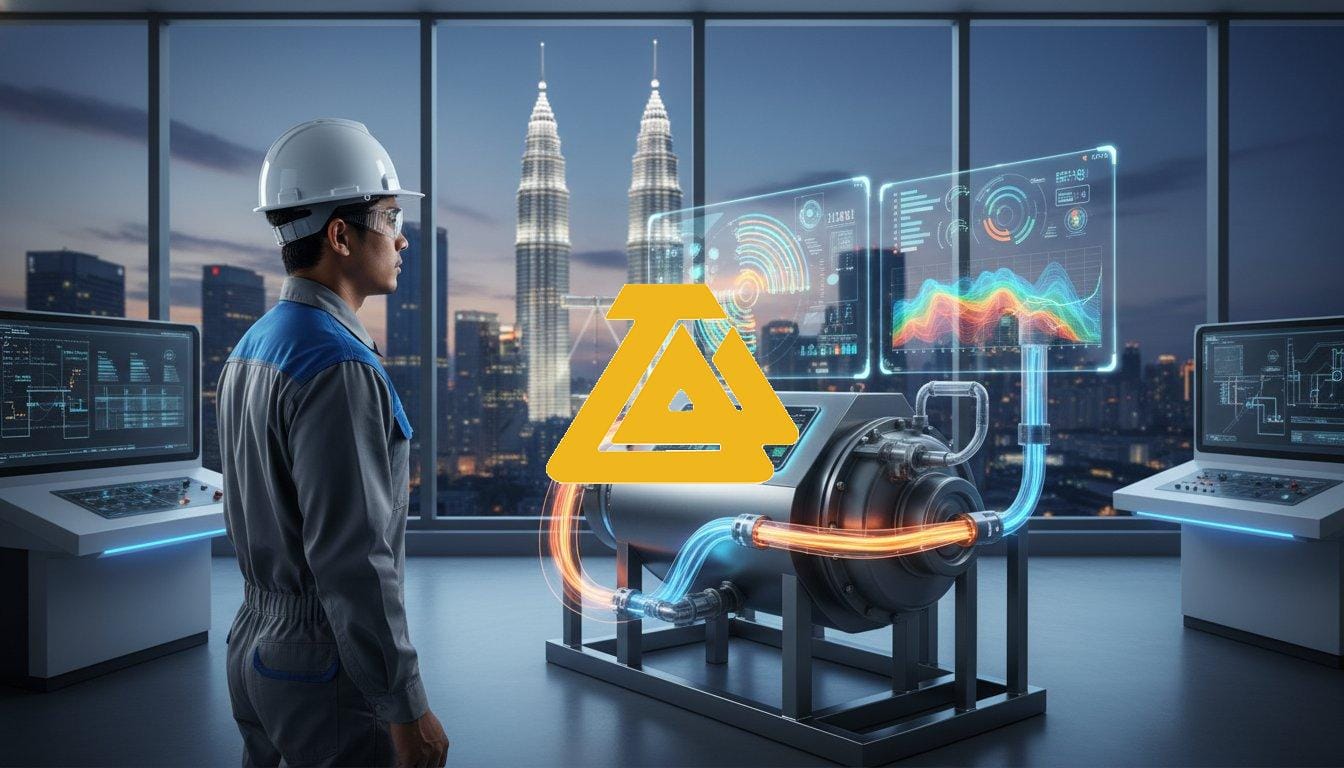
The standard approach of merely capturing escaping thermal energy is no longer enough to sustain a competitive industrial edge in Malaysia. As fuel prices fluctuate and the Energy Efficiency & Conservation Act (EECA) sets new benchmarks, implementing energy efficient waste heat recovery has become a technical necessity rather than a secondary option. You likely recognize that every unit of lost heat from a legacy furnace or boiler represents a direct hit to your operational margins in RM.
This guide explores how modern recovery strategies have evolved into a sophisticated discipline that combines high-performance Waste Heat Recovery Units (WHRU) with precision flow meters and digital displays. You’ll discover how these integrated solutions help modernize your facility and provide the data necessary to achieve a measurable ROI. We will outline the essential technical trends for 2026 that ensure your plant stays compliant while successfully reducing energy intensity across your production lines.
Key Takeaways
- Recognize why wasted thermal energy is now viewed as a significant financial liability under Malaysia’s evolving energy efficiency regulations.
- Explore the 2026 shift toward modular systems and heat-to-power technologies that simplify the retrofitting of existing industrial facilities.
- Learn to categorize heat grades to ensure you select the most effective energy efficient waste heat recovery hardware for your specific temperature requirements.
- Follow a structured implementation roadmap that begins with comprehensive thermal audits to identify every potential energy leak point within your plant.
- Understand how integrating precision instrumentation with a Waste Heat Recovery Unit (WHRU) secures a verifiable and long-term return on your investment.
The Hidden Resource: Understanding Energy Efficient Waste Heat Recovery
In many industrial operations, heat is often treated as a problematic byproduct that must be vented or cooled. However, as we look toward 2026, this perspective is shifting. Waste heat recovery (WHR) is the process of capturing thermal energy that would otherwise be exhausted into the environment and repurposing it for productive use. By gaining a deeper Understanding Waste Heat, plant managers can transition from seeing exhaust as a waste stream to seeing it as a primary energy source. Implementing energy efficient waste heat recovery is the most direct path for Malaysian manufacturers to reduce their carbon footprint while simultaneously lowering their operational costs.
The thermodynamic principle behind this is simple yet powerful. It involves taking “low-grade” thermal energy, such as exhaust gases or cooling water, and upgrading it into “high-value” process energy through specialized heat exchangers or power cycles. In the past, many plants in Kuala Lumpur and across the peninsula relied on passive cooling methods. Today, these methods are viewed as a financial liability. With the introduction of stricter energy standards, every degree of heat lost to the atmosphere is a lost opportunity for cost savings.
The Economic Impact of Thermal Inefficiency
In the Malaysian industrial sector, thermal inefficiency translates directly into “Lost Ringgit.” When heat escapes from uninsulated pipes or inefficient boilers, your plant’s energy intensity per unit of production increases. This isn’t just about fuel costs; it’s about the bottom line. Thermal leakage also places an unnecessary load on cooling systems, which can shorten the lifespan of critical machinery. By shifting from passive cooling to active energy recycling, businesses can protect their equipment while capturing RM savings that would otherwise vanish into thin air. Understanding the full scope of waste heat recovery system cost savings is essential for building a compelling business case that justifies capital investment in modern thermal management technology.
Primary Sources of Recoverable Heat in Factories
Identifying where energy is escaping is the first step toward optimization. Most factories house several untapped thermal reservoirs:
- Exhaust Gases: High-temperature streams from industrial kilns, furnaces, and boilers are the most common sources for high-grade recovery.
- Cooling Water: Heat captured from ANSI / API Centrifugal Pumps and other process cooling loops provides a steady supply of low-to-medium grade energy.
- Equipment Surfaces: Significant heat dissipates from hot surfaces and minor steam leaks, which can be harvested to preheat boiler feed water.
By integrating a Waste Heat Recovery Unit (WHRU), these sources are transformed from operational burdens into valuable assets. This strategic integration is essential for meeting the 2026 industrial standards that prioritize energy efficient waste heat recovery as a core component of plant modernization.
Technological Trends Reshaping Heat Recovery in 2026
Industrial operations in 2026 are moving beyond traditional, bulky installations toward agile and intelligent systems. A central trend in energy efficient waste heat recovery is the adoption of modular Waste Heat Recovery Units (WHRUs). These systems allow for flexible plant retrofitting, which is particularly useful for established Malaysian factories where floor space is limited. Instead of a complete system overhaul, engineers can now integrate compact recovery modules that scale alongside production needs. This shift is driven by the global move toward innovative waste heat solutions that prioritize adaptability and rapid deployment.
Digitalization is the second major pillar of modern heat management. The integration of IoT sensors and real-time monitoring allows for precise efficiency tracking that was previously impossible. By connecting thermal sensors to centralized control systems, plant managers can identify performance drops instantly. This ensures that the recovery system operates at its peak thermodynamic efficiency, preventing the gradual energy drift that often occurs in unmonitored legacy systems.
Organic Rankine Cycle (ORC) and Low-Grade Recovery
Organic Rankine Cycle systems are replacing traditional steam-based recovery in many modern applications. Because organic fluids have a lower boiling point than water, they can drive turbines even with minimal thermal input. This technology allows plants to generate electricity from heat sources as low as 80°C. For the Malaysian palm oil and chemical processing sectors, this means turning low-temperature cooling loops into a reliable source of internal power, directly lowering the RM cost per kilowatt-hour while improving overall plant safety.
Precision Monitoring: The Role of Flow Meters
Data is the backbone of any successful recovery strategy because you cannot manage what you do not measure. To ensure your energy efficient waste heat recovery system is performing at its peak, you need high accuracy flow meters to track thermal transfer fluids in real time. Ultrasonic and magnetic flow meters provide the precision required to calculate thermal exchange rates with high certainty, ensuring that your ROI calculations are based on hard data.
Integrating these meters with Enovation Controls or Murphy Displays allows for immediate visualization of performance metrics. This digital layer bridges the gap between heavy hardware like ANSI / API Centrifugal Pumps and the plant’s control room. It provides the transparency needed to justify equipment investments and ensure the WHRU is operating within its design parameters. If you are looking to modernize your monitoring capabilities, exploring our range of precision flow meters is a logical next step for your facility.
Analyzing Heat Grades: High vs. Low Temperature Recovery
To implement a successful thermal management strategy, you must first categorize the quality of the energy available. Not all exhaust streams are equal; the temperature and fluid composition dictate the choice of recovery technology. In the industrial sector, we generally classify waste heat into three distinct grades:
- High-grade heat: Temperatures exceeding 650°C, typically found in metal smelting, glass manufacturing, and heavy kiln operations.
- Medium-grade heat: Temperatures between 230°C and 650°C, common in gas turbine exhaust and steam boiler systems.
- Low-grade heat: Temperatures below 230°C, which includes cooling water, air compressor discharge, and low-pressure steam.
Historically, low-grade heat was ignored because the cost of recovery often outweighed the energy value. However, with rising fuel costs in Malaysia and the push for energy efficient waste heat recovery, these low-temperature streams are now essential for achieving total plant optimization. Choosing the right heat exchanger requires evaluating fluid corrosivity and operating pressure alongside these temperature profiles to ensure long-term equipment reliability.
High-Grade Heat: Direct Reuse and Steam Generation
High-temperature environments offer the most straightforward path to significant energy savings. By utilizing furnace exhaust to preheat combustion air through recuperators or regenerators, plants can reduce their primary fuel consumption by a measurable margin. In sectors like metal smelting and glass manufacturing, this direct reuse of energy often provides the fastest path to a clear ROI. The high thermal gradient allows for the generation of high-pressure steam, which can then be used for mechanical work or further process heating elsewhere in the facility.
Low-Grade Heat: The New Frontier of Efficiency
Low-grade recovery is where modern innovation is most visible. Heat dissipated from air compressors and ANSI / API Centrifugal Pumps jackets can be harvested to preheat boiler feed water or provide space heating. While the temperature is lower, the sheer volume of this heat in a typical Malaysian factory makes it a valuable resource. Some facilities are now exploring Phase Change Materials (PCM) for thermal energy storage, allowing them to capture heat during peak operation and release it when needed.
Justifying the investment in low-grade recovery requires a system-wide perspective. When you account for the reduced load on cooling towers and the incremental savings in RM across the entire production line, the business case for energy efficient waste heat recovery becomes compelling. Prioritizing these projects starts with a thermal audit to map out where the most accessible energy resides, ensuring that your capital expenditure is directed toward the most impactful recovery points.
Implementation Roadmap: Optimizing Malaysian Industrial Plants
Implementing a successful recovery project requires a methodical approach that moves from initial data collection to full-scale facility integration. The first step is a comprehensive thermal audit to identify every energy leak point, from uninsulated piping to inefficient exhaust stacks. Once these points are mapped, you must evaluate compatibility with the Waste Heat Recovery Unit Malaysia standards to ensure the selected hardware can handle the specific temperature and pressure profiles of your plant.
Precise measurement is the foundation of any ROI claim. You’ll need to select instrumentation for both baseline and post-implementation measurement to verify performance gains. This typically involves installing high-precision flow meters and Murphy Displays to track energy transfer in real time. Finally, pilot testing on a single process line allows for fine-tuning before scaling the solution across the entire facility. This phased approach minimizes risk and ensures that your energy efficient waste heat recovery system delivers its promised results. For a detailed breakdown of how these projects translate into measurable financial returns, our guide on waste heat recovery system cost savings for Malaysian industrial facilities provides a comprehensive analysis of ROI timelines and fuel cost reductions under the 2026 regulatory framework.
Navigating the Energy Efficiency & Conservation Act (EECA)
The Energy Efficiency & Conservation Act (EECA) has fundamentally changed the industrial landscape in Malaysia. High-volume industrial consumers are now mandated to conduct regular energy audits and meet specific conservation targets. Compliance isn’t just about avoiding penalties. It’s a strategic driver for WHRU adoption. To support this transition, the Malaysian government offers green technology tax breaks like the Green Investment Tax Allowance (GITA) and Green Income Tax Exemption (GITE), which can significantly offset the initial capital expenditure of recovery systems in RM.
Industry-Specific Applications: Palm Oil and Refineries
In the palm oil sector, capturing steam from sterilization processes offers a massive opportunity for heat recycling. By using this energy for boiler feedwater preheating, mills can drastically reduce their primary fuel consumption. Facilities seeking to maximize these gains can explore dedicated waste heat recovery unit for palm oil industry applications that are specifically engineered to handle the unique thermal profiles of sterilization and processing operations. Similarly, refineries can optimize their bulk material handling equipment areas. Proper thermal management in these zones prevents heat-related mechanical wear on conveyors and handling systems, ensuring longer equipment life and fewer unplanned shutdowns. By prioritizing energy efficient waste heat recovery in these high-impact areas, Malaysian plants can maintain a competitive edge while meeting new sustainability standards.
To begin your facility’s modernization, contact us to discuss how our Waste Heat Recovery Unit (WHRU) solutions can meet your specific plant requirements.
Partnering with Totalmas Sdn Bhd for Sustainable Thermal Success
Achieving a reliable return on investment for energy efficient waste heat recovery requires a partner who understands both the mechanical and digital aspects of plant optimization. Totalmas Sdn Bhd serves as a specialized provider in Kuala Lumpur, offering a comprehensive suite of hardware and precision instrumentation designed for the rigors of the Malaysian industrial sector. With over 33 years of experience, we’ve established ourselves as a dependable resource for businesses seeking to modernize their thermal management strategies without compromising on operational stability.
The “Totalmas Sdn Bhd Advantage” lies in our ability to act as a single point of contact for complex technical requirements. Managing a Waste Heat Recovery Unit (WHRU) becomes significantly simpler when integrated with our range of Murphy Displays and Enovation Controls. These systems provide the real-time visualization necessary to track efficiency gains and ensure that every RM invested in recovery technology translates into tangible energy savings. By linking technical capabilities with broader operational benefits, Totalmas Sdn Bhd helps your plant maintain peak performance while meeting modern sustainability standards.
Comprehensive Equipment Supply for WHR Systems
A successful recovery installation depends on the seamless interaction of various technical components. Totalmas Sdn Bhd provides heavy-duty ANSI / API Centrifugal Pumps specifically engineered for thermal fluid transport, ensuring consistent performance in high-temperature environments. To automate these systems, we supply high-precision pressure transmitters, orifice plates, flanges, and flow meters that provide the data backbone for your facility’s energy management system. Additionally, our expert technical support assists in selecting the appropriate Mec Handling Conveyors to ensure mechanical reliability in zones where recovered heat is being processed or redirected.
Getting Started with Your Efficiency Upgrade
Transitioning to a modern thermal strategy begins with a consultation with our experienced engineers. Totalmas Sdn Bhd assists with system sizing and the selection of instrumentation to ensure your energy efficient waste heat recovery setup is tailored to your plant’s specific output and temperature grades. In the Malaysian market, we understand that reliable after-sales support is just as critical as the initial equipment quality. Our commitment to long-term partnership means your facility remains supported throughout the lifecycle of your recovery system, ensuring sustained performance and continued compliance with local energy regulations.
Ready to optimize your facility’s thermal efficiency and reduce your operational costs? Contact Totalmas Sdn Bhd Today for Your Waste Heat Recovery Solution.
Securing Long-Term Industrial Efficiency for 2026
Transitioning your facility toward a more sustainable and profitable future requires a technical shift in how thermal energy is managed. We’ve explored how identifying heat grades and integrating digital monitoring can transform wasted exhaust into a primary energy source. By adopting a structured approach to energy efficient waste heat recovery, your plant can stay ahead of the Energy Efficiency & Conservation Act (EECA) requirements while significantly reducing fuel costs in RM.
Totalmas Sdn Bhd provides the specialized WHRU and instrumentation solutions necessary to bridge the gap between heavy hardware and precision data. With over 33 years of industrial expertise and our position as an authorized distributor of Enovation Controls and Murphy Displays, we offer the technical reliability your business demands. Don’t let valuable energy escape your production lines when proven solutions are available to capture it. We’re ready to help you modernize your operations with confidence.
Consult with our technical experts at Totalmas Sdn Bhd on Energy Efficient Waste Heat Recovery to begin your plant’s modernization today. We look forward to supporting your long-term operational success.
Frequently Asked Questions
What is the typical ROI for an industrial waste heat recovery system?
The typical ROI for an industrial waste heat recovery system in Malaysia usually ranges between 18 to 36 months, though this depends heavily on the heat grade and current fuel prices. High-temperature applications in smelting or glass manufacturing often see faster returns due to the sheer volume of offset energy. For low-grade recovery, the ROI is calculated by looking at the total reduction in RM spent on boiler fuel and cooling tower electricity over the system’s lifecycle.
Can waste heat recovery be retrofitted into older Malaysian factories?
Retrofitting older Malaysian factories is entirely feasible through the use of modular Waste Heat Recovery Units. These compact systems are engineered to integrate with legacy boiler and furnace stacks without requiring a complete plant shutdown. By utilizing flexible piping and specialized ANSI / API Centrifugal Pumps, engineers can redirect thermal energy from existing equipment to preheat processes or generate internal power.
How does the Energy Efficiency & Conservation Act (EECA) affect my plant?
The Energy Efficiency & Conservation Act (EECA) requires high-volume industrial energy consumers in Malaysia to implement formal energy management systems and undergo regular audits. Non-compliance can lead to significant penalties, making energy efficient waste heat recovery a critical tool for meeting these statutory conservation targets. Implementing these systems helps your plant document measurable energy intensity reductions that satisfy the Suruhanjaya Tenaga (Energy Commission) requirements.
What is the difference between a recuperator and a regenerator in WHR?
A recuperator is a continuous heat exchanger where the hot exhaust and cool incoming air flow through separate channels to transfer energy without mixing. In contrast, a regenerator uses a storage medium that is alternately exposed to hot exhaust and cold air, capturing heat in one cycle and releasing it in the next. While recuperators are common for steady-state processes, regenerators are often used in high-temperature batch operations like glass melting.
Which industries in Malaysia benefit most from energy efficient waste heat recovery?
Industries with high thermal demands such as palm oil milling, chemical processing, steel manufacturing, and cement production benefit most from these technologies. Palm oil mills, for instance, can capture sterilization steam to preheat boiler feed water, directly reducing the RM cost of steam generation. Any facility that operates continuous furnaces or high-pressure steam systems has significant potential for energy efficient waste heat recovery to lower overheads.
How do flow meters improve the efficiency of a waste heat recovery unit?
Flow meters improve recovery efficiency by providing the precise data needed to optimize thermal exchange rates in real time. By tracking the velocity and volume of thermal transfer fluids, these instruments allow the control system to adjust pump speeds and valve positions with high accuracy. Integrating these meters with Murphy Displays ensures that operators can visualize performance and identify any efficiency drops before they lead to energy waste.
Are there government incentives for installing WHRUs in Malaysia?
Yes, the Malaysian government provides substantial incentives through the Green Investment Tax Allowance (GITA) and the Green Income Tax Exemption (GITE). These programs allow businesses to offset a percentage of the qualifying capital expenditure for recovery systems against their statutory income. These financial mechanisms are specifically designed to accelerate the adoption of green technology and improve the commercial viability of efficiency projects across the local industrial landscape.
What maintenance is required for a modular waste heat recovery unit?
Maintenance for a modular unit primarily involves periodic cleaning of the heat exchanger surfaces to prevent fouling and scale buildup that can impede thermal transfer. It’s also essential to inspect the mechanical seals of the centrifugal pumps and calibrate the digital sensors and flow meters to ensure data accuracy. Because modular units are designed for accessibility, most routine inspections can be performed with minimal impact on the plant’s overall production schedule.