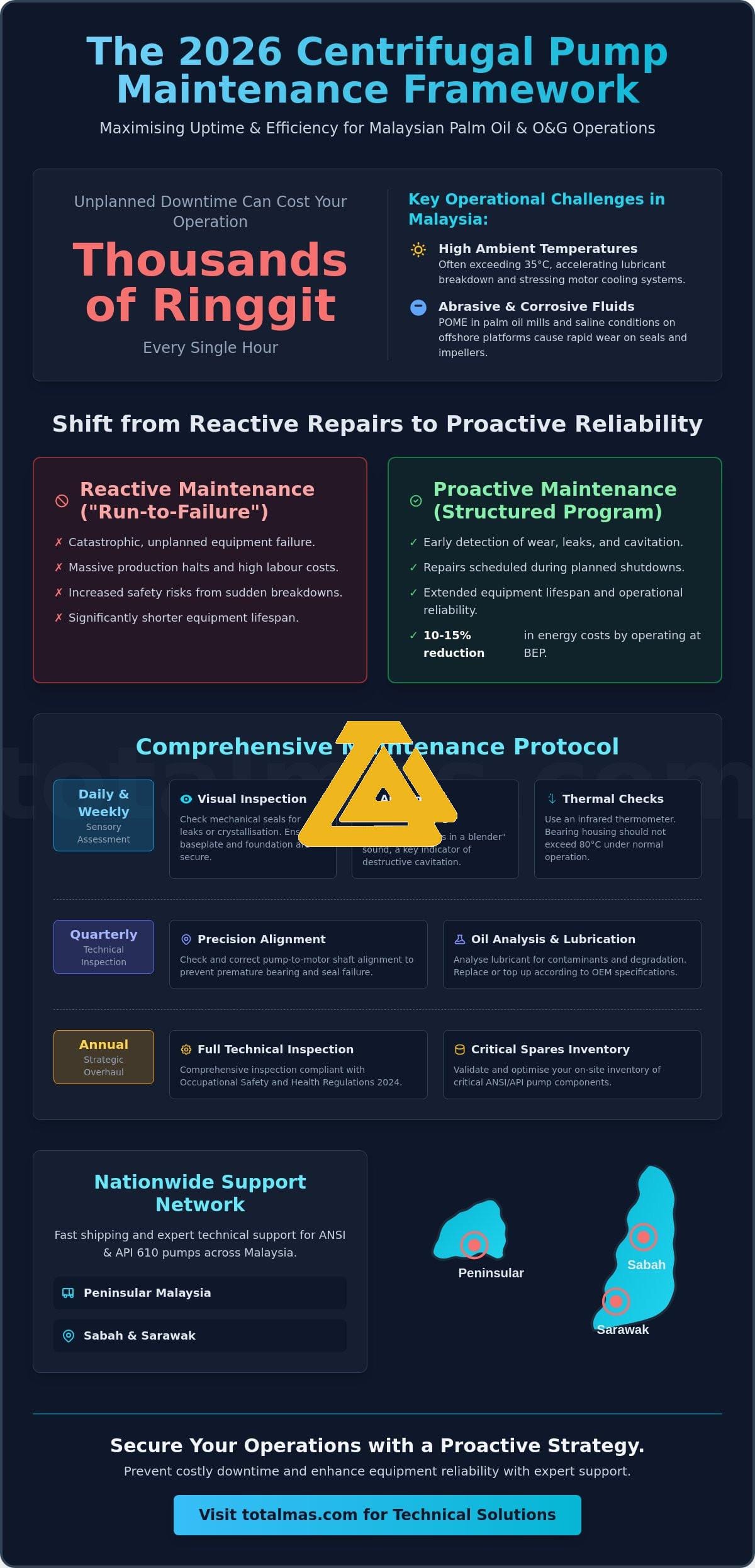
An unexpected mechanical failure in a palm oil mill or an offshore platform can cost your operation thousands of ringgit every hour, yet most of these incidents are entirely preventable. For a Malaysian factory manager, maintaining operational continuity depends on a rigorous centrifugal pump maintenance checklist that accounts for our unique environmental challenges. You’re likely already aware that abrasive fluids and high ambient temperatures often exceeding 35 Celsius can accelerate seal wear and bearing fatigue. At Totalmas, we recognize that consistent performance is the backbone of your facility’s success.
We understand that finding reliable technical support and sourcing critical parts for ANSI or API centrifugal pumps can be difficult, particularly for facilities located in Sabah and Sarawak. This 2026 guide provides a comprehensive technical framework to help you transition from reactive repairs to a proactive, structured maintenance program. By following this protocol, you’ll reduce operational costs and ensure your equipment meets the latest safety standards under the Occupational Safety and Health (Plant Requiring Certificate of Fitness) Regulations 2024. We’ll examine essential daily inspections, lubrication schedules, and our specialized distribution network that ensures fast shipping across both Peninsular and East Malaysia.
Key Takeaways
- Identify early warning signs like cavitation and seal leaks to prevent costly production halts in Malaysian palm oil and manufacturing sectors.
- Implement a structured centrifugal pump maintenance checklist covering quarterly precision alignments and oil analysis to extend the lifespan of your ANSI and API equipment.
- Adopt specialized strategies for managing abrasive wear in POME systems and corrosion in offshore environments to maintain high operational reliability.
- Optimize your critical spares inventory and leverage the Totalmas distribution network for fast shipping and technical support across Peninsular Malaysia, Sabah, and Sarawak.
Maximizing Reliability in Industrial Fluid Transport Solutions
Centrifugal pumps serve as the mechanical heart of Malaysia’s industrial infrastructure. From the large-scale processing of crude palm oil in Sabah to the transport of refined petroleum products in Terengganu, these machines are essential for consistent fluid movement. For a foundational centrifugal pump overview, it’s helpful to recognize that their efficiency directly dictates the profitability of your facility. When a pump fails unexpectedly, the economic impact is immediate. You aren’t just looking at the cost of replacement parts; you’re calculating the loss of thousands of Ringgit in unplanned downtime and diverted labor.
A standardized centrifugal pump maintenance checklist acts as the primary defense against these financial losses. By implementing a uniform set of inspection protocols, factory managers can ensure that technical standards remain consistent across multiple sites. Reliable pump performance is also inextricably linked to energy consumption. A pump operating outside its Best Efficiency Point (BEP) due to wear or poor maintenance can increase electricity costs by 10% to 15%. Totalmas provides the technical support needed to audit these systems and restore them to peak performance, ensuring your transport solutions remain both reliable and cost-effective.
The Importance of Proactive vs. Reactive Maintenance
Many Malaysian factories still fall into the “run-to-failure” trap, treating maintenance as a reaction to a crisis. This approach is inherently risky in high-demand sectors like oil and gas or palm oil processing. Transitioning to proactive care involves establishing a baseline for pump performance during the initial commissioning phase. Utilizing advanced monitoring tools, such as Murphy Displays and automated sensors, allows your team to detect early signs of vibration or temperature spikes. These digital insights enable you to schedule repairs during planned shutdowns rather than halting production in the middle of a shift. It’s a shift in mindset that prioritizes long-term equipment health over temporary fixes.
Understanding the Malaysian Operational Context
The local climate introduces specific variables that can shorten the lifespan of industrial equipment. Ambient temperatures frequently exceed 30 Celsius, which places additional stress on motor cooling systems and accelerates the breakdown of lubricants. In critical sectors, the use of API 610 centrifugal pumps Malaysia standards is often mandatory to ensure the equipment can withstand these harsh conditions safely. High humidity also poses a constant threat to electrical components, necessitating frequent checks of terminal boxes for moisture ingress. Totalmas supports these operational needs with a robust distribution network, offering fast shipping of specialized parts and technical assistance to both Peninsular Malaysia and East Malaysia, including remote areas of Sabah and Sarawak.
Daily and Weekly Performance Monitoring Protocols
Executing a consistent centrifugal pump maintenance checklist begins with a disciplined daily sensory assessment. While digital sensors provide precise data, the experienced eye and ear of a factory manager remain invaluable for detecting early mechanical distress. Visual inspections should focus primarily on the mechanical seal area and the baseplate. In Malaysian palm oil mills, it’s common to see fluid crystallization or “wicking” at the seal face. Any visible leakage from a mechanical seal is a signal that the faces are compromised, whereas for pumps using traditional packing, a steady drip of approximately 40 to 60 drops per minute is often necessary for cooling.
Auditory monitoring is equally critical. You must listen for the distinct “marbles in a blender” sound, which is the classic indicator of cavitation. This phenomenon occurs when the Net Positive Suction Head (NPSH) is insufficient, causing vapor bubbles to collapse against the impeller. If left unaddressed, cavitation will pit the metal surfaces and lead to catastrophic failure. To supplement what you hear, use an infrared thermometer to monitor bearing housing temperatures. Under standard Malaysian operating conditions, bearing temperatures should remain stable and typically shouldn’t exceed 80 Celsius. A sudden spike in thermal readings often precedes a bearing seizure, giving you a narrow window to intervene.
The Daily Walk-Around Checklist
Your daily routine must involve verifying the suction and discharge pressure readings on local gauges. Significant deviations from the baseline established during commissioning suggest either a blockage in the suction line or wear in the internal clearances. You should also check the oil level and clarity through the sight glass. In our high-humidity environment, oil often becomes milky, which indicates water contamination. If the oil appears dark or contains visible particulates, it has likely oxidized or is carrying metal wear debris. For facilities requiring advanced monitoring, integrating Murphy Displays can automate these checks, providing real-time alerts before manual inspections even begin.
Weekly Operational Adjustments
On a weekly basis, your team should record flow rates to identify gradual performance degradation that might be missed day-to-day. This is also the time to test standby pumps. It’s a common mistake to leave a standby unit idle for months, only to find the shaft has seized or the seals have dried out when an emergency occurs. Rotate your primary and standby units weekly to ensure even wear and immediate availability. Finally, ensure that cooling fins on the motor are free from the dust and debris common in Malaysian processing plants. Keeping these surfaces clean is essential for maintaining thermal efficiency when ambient temperatures are high.
Reliability across your entire fleet depends on the availability of technical expertise and high-quality components. Totalmas maintains a robust support network that covers both Peninsular Malaysia and East Malaysia. Whether your facility is in the Klang Valley or a remote area of Sarawak, our team provides fast shipping of critical parts and on-site technical assistance to keep your fluid transport solutions running without interruption.
Quarterly and Annual Technical Inspection Framework
While daily walk-arounds catch immediate issues, long-term reliability is built during scheduled technical reviews. A robust centrifugal pump maintenance checklist must evolve every few months into a more intrusive examination of internal components. This phase focuses on precision. We move from sensory observation to data-driven diagnostics. Using laser alignment tools is no longer optional; it’s a requirement for preventing premature bearing failure and seal degradation in high-vibration environments like palm oil mills. These tools provide the sub-millimeter accuracy needed to ensure the pump and motor shafts are perfectly collinear.
The Quarterly Deep-Dive
Every three months, your technical team should perform a vibration signature analysis. This goes beyond hearing noise; it identifies specific frequencies associated with bearing defects or impeller imbalance. Next, inspect the coupling and apply fresh grease if required. Verify the integrity of the spacer element, as rubber components can degrade rapidly in Malaysian ambient heat. Finally, check for “soft foot” conditions. Tighten all foundation bolts to ensure the pump frame remains stable. This prevents the frame distortion that frequently leads to chronic shaft misalignment and seal failure.
Laboratory-grade oil analysis is another pillar of quarterly care. Visual checks often miss microscopic metal shavings or chemical breakdown that indicate internal wear. For facilities managing corrosive fluids, evaluating the condition of seals is vital for safety and environmental compliance. When dealing with a chemical pump, you must decide whether to repair or replace the mechanical seal based on face wear and elastomer elasticity. Totalmas offers technical support to help you make these critical decisions, ensuring your facility maintains high safety standards while optimizing your maintenance budget.
Annual Major Overhaul Procedures
The annual overhaul involves a complete teardown of the unit to inspect internal passages for erosion or corrosion. Measure wear ring clearances with precision calipers. Once clearances exceed 100% of the original design specification, pump efficiency drops sharply and energy costs rise. The impeller must undergo dynamic balancing to ISO 1940 standards to eliminate parasitic vibrations during high-speed operation. We also recommend hydrostatic testing of the casing to ensure structural integrity, especially for pumps operating in coastal regions where salt-air corrosion is aggressive. Totalmas facilitates these overhauls with fast shipping of genuine spares across Peninsular Malaysia, Sabah, and Sarawak, ensuring your turnaround remains on schedule.
Managing Regional Challenges: From Palm Oil Mills to Offshore Platforms
Malaysia’s industrial landscape presents unique geographical and environmental challenges that standard global manuals often overlook. Specifically, the combination of humidity levels frequently reaching 80% and ambient temperatures consistently exceeding 30 Celsius accelerates the oxidation of bearing lubricants. This thermal stress requires a more frequent lubrication interval within your centrifugal pump maintenance checklist than what is typically recommended in cooler climates. When moisture mixes with oil, it creates an acidic sludge that can pit bearing races within weeks. Avoiding this lubricant degradation is the first step toward long-term reliability.
Managing these conditions is particularly difficult for coastal facilities and offshore platforms where high salinity increases the risk of galvanic corrosion. Choosing the right industrial water pump supplier Malaysia is essential for sourcing materials like duplex stainless steel that can withstand these aggressive environments. Totalmas ensures that these specialized components are available with fast shipping to both Peninsular Malaysia and East Malaysia, including remote sites in Sabah and Sarawak. Our technical support team understands the logistical hurdles of transporting heavy equipment across the South China Sea and works to minimize your lead times.
Palm Oil Sector: Combatting Abrasive Solids
In the palm oil industry, pumping palm oil mill effluent (POME) involves handling high concentrations of abrasive sand and organic fibers. These solids act like sandpaper on internal pump components. To extend equipment life, managers should prioritize hard-facing the impellers with tungsten carbide or similar wear-resistant coatings. Additionally, implementing external flush systems for mechanical seals is necessary to prevent solids from clogging the seal chamber. For detailed guidance on handling these thick slurries, refer to our guide on how to select industrial pumps for high-viscosity fluids. These mill-specific adjustments prevent the premature wear that often halts production during peak harvesting seasons.
Oil & Gas: Adhering to API 610 Standards
The oil and gas sector demands a higher level of material traceability and documentation to meet strict safety regulations. Maintenance for these critical units must include meticulous grounding checks for explosion-proof motors and verification of seal support systems, such as Plan 52 or 53. Any drop in barrier fluid pressure in these systems indicates a potential leak that could compromise site safety. Totalmas provides the technical assistance required to audit these complex setups, ensuring your facility remains compliant with local standards while optimizing performance.
If you require specialized components or on-site technical support for your facility, contact Totalmas today for reliable industrial solutions across Malaysia.
Strategic Spare Parts Management and Technical Support in Malaysia
A rigorous centrifugal pump maintenance checklist is only as strong as the supply chain supporting it. In high-stakes environments like the oil and gas fields off Labuan or palm oil estates in the Kinabatangan region, waiting weeks for an overseas shipment isn’t an option. Downtime costs accumulate by the hour. To mitigate this risk, factory managers must maintain a “Critical Spares” inventory on-site. This inventory should at minimum include mechanical seal kits, bearing sets, casing gaskets, and at least one spare impeller. Having these parts ready for immediate installation can reduce a potential two-week shutdown to a single day of maintenance.
Integrating automation into your monitoring strategy further enhances reliability. Utilizing Enovation Controls and Murphy Displays allows for real-time protection against low suction pressure or high discharge temperatures. These systems can trigger an automatic shutdown before a pump sustains permanent damage, effectively acting as a digital watchdog for your fluid transport solutions. Totalmas provides the technical expertise to integrate these controls into your existing infrastructure, bridging the gap between manual inspections and automated safety protocols.
Ensuring Parts Availability in Sabah and Sarawak
Geographical barriers in East Malaysia often complicate the procurement of industrial components. Whether your operations are based in Bintulu’s industrial hub or the remote plantations surrounding Sandakan, Totalmas has optimized its logistics network to serve these areas. We prioritize fast shipping across both Peninsular and East Malaysia to ensure that your centrifugal pump maintenance checklist remains actionable. For remote palm oil estates and offshore hubs, we offer consignment stock options. This ensures that essential spares are already on your premises, with billing only occurring upon usage. Choosing a Malaysian partner over an overseas OEM means you gain access to local technical support that understands the specific regulatory and logistical landscape of the region.
Leveraging Totalmas Expertise for System Audits
Beyond providing hardware, a long-term partnership with Totalmas offers access to professional system audits. These audits go deeper than routine checks to identify energy-saving opportunities and hydraulic bottlenecks that might be straining your motors. We also provide hands-on training for your maintenance teams, focusing on precision alignment and correct seal installation techniques. This knowledge transfer ensures that your staff can execute every step of the maintenance protocol with confidence and accuracy. For those seeking to optimize their facility’s efficiency and lifespan, contact Totalmas for expert pump maintenance support and high-quality spares today.
Securing Long-Term Performance in Malaysian Industrial Fluid Systems
Standardizing your centrifugal pump maintenance checklist transforms reactive repairs into a predictable asset management strategy. It ensures that high ambient temperatures and abrasive fluids don’t compromise your facility’s output. Success in the Malaysian industrial sector depends on this technical discipline and the support of a partner who understands local logistical realities. By prioritizing preventative care, you reduce unexpected downtime and optimize the operational lifespan of your critical fluid transport solutions.
Totalmas brings over 33 years of established expertise to your operations. As an authorized distributor for Enovation Controls and API-standard pumps, we provide a level of technical depth that overseas providers can’t match. Our distribution network ensures fast shipping and reliable assistance across Peninsular Malaysia and East Malaysia, including Sabah and Sarawak. Whether you’re managing a remote palm oil mill or a central refinery, we offer the security of a long-term technical partnership.
Explore Totalmas Industrial Pump Solutions and Technical Support to optimize your equipment lifespan today. With the right protocols and professional support, your fluid transport systems will remain a reliable foundation for your business’s growth.
Frequently Asked Questions
How often should a centrifugal pump be serviced in Malaysia?
Centrifugal pumps should follow a tiered servicing schedule that includes daily visual inspections and a more intensive quarterly technical review. Given the high ambient temperatures often exceeding 30 Celsius in local facilities, a comprehensive centrifugal pump maintenance checklist should also mandate an annual major overhaul. This annual teardown is essential for measuring wear ring clearances and performing dynamic balancing to maintain efficiency in high-humidity environments.
What are the most common causes of centrifugal pump failure in palm oil mills?
The primary causes of failure in palm oil mills are abrasive wear from sand or fiber and the clogging of mechanical seals. Pumping palm oil mill effluent (POME) introduces solids that act as an abrasive, rapidly eroding impellers and casing walls. Additionally, lubricant contamination from high humidity often leads to premature bearing seizure if oil clarity isn’t monitored weekly.
Is it better to repair or replace a leaking mechanical seal?
The decision depends on the condition of the seal faces and the elasticity of the elastomers. Minor wear on the faces can often be lapped and repaired, but severe pitting or heat-damaged O-rings require a full replacement to ensure site safety. For critical chemical or API-standard pumps, replacing the seal is generally the more reliable option to prevent hazardous leaks and unplanned downtime.
How does high ambient temperature affect pump motor lifespan?
High ambient temperatures reduce the cooling efficiency of the motor, which can lead to accelerated winding insulation breakdown. When temperatures consistently stay above 30 Celsius, lubricants also oxidize faster, losing their protective properties. This thermal stress necessitates more frequent greasing intervals and the use of high-quality, temperature-stable lubricants to prevent motor burnout.
Can Totalmas provide technical support for pump systems in East Malaysia?
Totalmas provides full technical support and distribution coverage for all of East Malaysia, including industrial hubs like Bintulu, Sandakan, and Labuan. Our logistics network is designed for fast shipping of critical spares to Sabah and Sarawak, ensuring remote facilities aren’t left waiting for parts. We offer on-site technical assistance and system audits to help regional managers maintain operational continuity.
What is the role of vibration analysis in a maintenance checklist?
Vibration analysis serves as a diagnostic tool to identify specific mechanical issues like bearing defects, shaft misalignment, or impeller imbalance. By recording vibration signatures quarterly, you can detect early warning signs that are inaudible to the human ear. This data allows you to schedule repairs during planned shutdowns, avoiding the high cost of emergency mechanical failures.
How do I prevent cavitation in my industrial fluid transport solutions?
Preventing cavitation requires ensuring that the Net Positive Suction Head (NPSH) available is always higher than the NPSH required by the pump. You should regularly clean suction strainers to prevent blockages and avoid operating the pump too far to the right of its performance curve. Monitoring suction pressure gauges daily is a practical way to spot the pressure drops that lead to vapor bubble formation.
What specific maintenance does an API 610 pump require compared to a standard ANSI pump?
API 610 pumps require more rigorous material traceability and stricter monitoring of seal support systems, such as Plan 52 or 53. While a standard centrifugal pump maintenance checklist covers basic lubrication and alignment, an API-standard pump demands precise documentation of all clearances and hydrostatic testing of the casing. Utilizing Murphy Displays can help automate the monitoring of these complex seal support systems for better reliability.