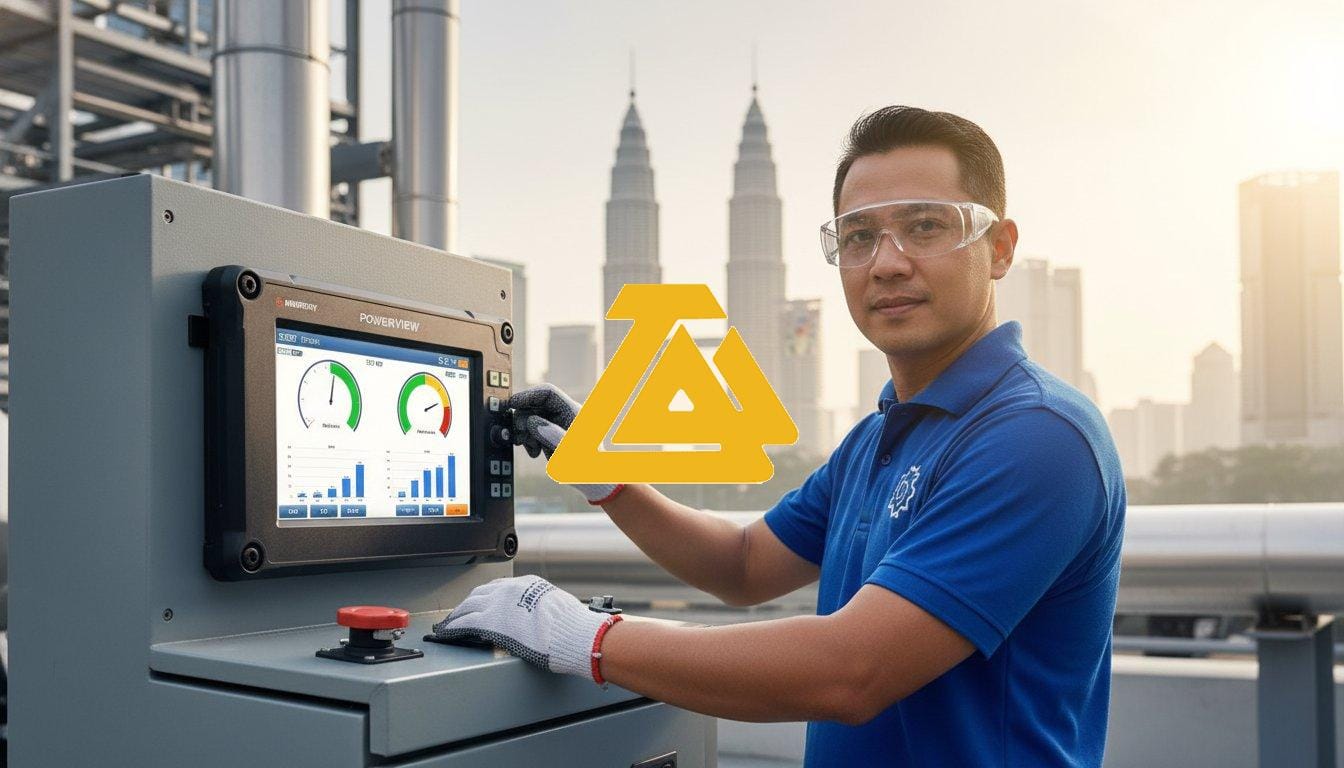
A display that fails under the glare of the midday sun or succumbs to moisture isn’t just a minor nuisance; it’s a liability that can halt an entire industrial operation. You likely understand that maintaining reliable control over modern J1939 engines requires more than just a standard screen. It demands a ruggedized interface that can handle harsh environments while simplifying complex data integration. Murphy PowerView displays are engineered specifically for these challenges, providing the clarity and durability needed for mission-critical monitoring.
By mastering the technical specifications and selection criteria for these units, you’ll be able to optimize your engine monitoring systems for maximum efficiency. This article provides a comprehensive look at the Murphy PowerView line, from the compact PV101 to the high-resolution PV1200. We’ll cover essential durability ratings like IP68 environmental sealing and explore the latest software enhancements in PowerVision Configuration Studio version 8.14.4. Whether you’re integrating with existing CAN bus systems or looking for WiFi-enabled over-the-air updates, this guide ensures you select the right HMI hub to protect your equipment and your bottom line.
Key Takeaways
- Understand the technical shift from mechanical gauges to digital CAN bus interfaces to modernize your engine data management.
- Discover how Murphy PowerView displays utilize optical bonding and IP68 ratings to maintain visibility and functionality in harsh environments.
- Identify the role of real-time engine monitoring in preventing expensive operational downtime across Malaysia’s industrial sectors.
- Learn to apply a technical decision framework based on screen size, processing power, and I/O requirements to select the optimal display model.
- Recognize the importance of sourcing through an authorized distributor to secure professional technical expertise and long-term support.
Understanding Murphy PowerView Displays: The Standard in Engine Instrumentation
Murphy PowerView displays represent the evolution of industrial monitoring, moving beyond simple data readout to comprehensive system control. These ruggedized Human-Machine Interfaces (HMIs) serve as the central hub for engine performance data, providing operators with a clear view of critical metrics. In the past, industrial dashboards were crowded with mechanical gauges that offered limited information and required extensive maintenance. The shift toward digital CAN bus displays has simplified these layouts while offering a level of precision that analog systems simply cannot match.
At the heart of this technology is the ability to communicate directly with the Engine Control Unit (ECU). As engines have become more complex to meet Tier 4 and Stage V emissions standards, the volume of data generated has increased exponentially. Murphy PowerView displays are the preferred choice for these advanced engines because they can process and display specialized parameters like Diesel Particulate Filter (DPF) soot levels and Selective Catalytic Reduction (SCR) status in real-time. By interpreting J1939 and NMEA 2000 protocols, these displays ensure that operators have a professional grade tool for monitoring fuel efficiency, oil pressure, and cooling temperatures simultaneously.
The Evolution of CAN Bus and J1939 Integration
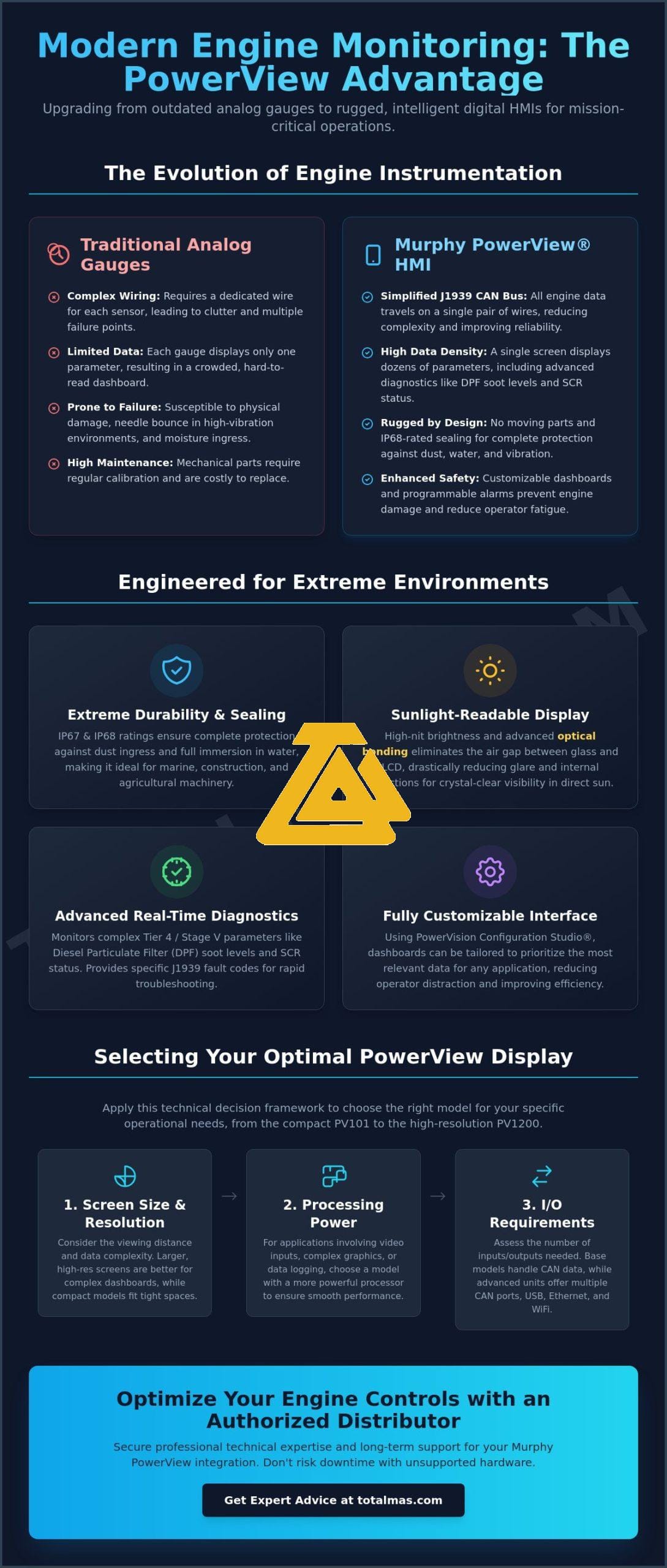
By utilizing a Controller Area Network (CAN), these displays drastically reduce the complexity of engine wiring. Instead of running a dedicated wire for every single temperature or pressure sensor, all data travels across a single pair of wires. J1939 protocol is the backbone of modern industrial engine communication. This standardization ensures that diagnostic information is accurate and consistent across different equipment types, allowing for faster troubleshooting. When a fault occurs, the display doesn’t just show a generic warning light; it provides specific fault codes that help technicians identify the root cause immediately.
Why Analog Gauges are Giving Way to Digital HMIs
The transition to digital interfaces is driven by the need for higher data density and improved reliability. A single digital display can monitor dozens of parameters that would otherwise require an entire wall of analog dials. In high-vibration industrial environments, mechanical gauges are prone to needle bounce and physical failure. Digital HMIs eliminate these moving parts, offering superior durability. They also enhance operator safety through several key features:
- Programmable Alarms: Operators can set specific thresholds for visual warnings and audible alerts to prevent engine damage.
- Reduced Failure Points: Consolidated wiring minimizes the risk of loose connections or sensor failures common in complex analog looms.
- Customizable Dashboards: Users can prioritize the most relevant data for their specific task, reducing operator fatigue and distraction.
By consolidating information into a single, high-resolution interface, businesses can protect their capital investments while improving daily operational efficiency. These displays don’t just show numbers; they provide the context needed to make informed decisions on the job site.
Key Features of the PowerView Series: Built for Harsh Environments
Industrial environments demand hardware that exceeds the capabilities of standard consumer electronics. While a consumer tablet might overheat or suffer screen failure in high-humidity conditions, Murphy PowerView displays are built to endure. These units carry rigorous sealing standards, often reaching IP67 or IP68 ratings. This means they’re completely protected against dust ingress and can withstand immersion in water, making them ideal for heavy machinery operating in unpredictable weather. Technical details on these deployments can be found in the Industrial Applications Catalog, which highlights their use in demanding marine and off-road sectors.
Sunlight-Readable Technology and Optical Bonding
In regions like Malaysia, intense sunlight and high humidity present a dual threat to display visibility. Murphy addresses this through high-nit brightness levels and advanced optical bonding. This process involves injecting a specialized resin between the protective glass and the LCD, effectively eliminating the air gap. This technical choice prevents internal fogging caused by temperature fluctuations and significantly reduces glare. Beyond visibility, optical bonding increases the impact resistance of the screen, ensuring the display remains functional even if struck by debris. It’s a critical feature for operators who need clear data at a glance without struggling against reflections.
Ruggedized Construction: Vibration and Shock Resistance
Durability also extends to internal stability and thermal management in Murphy PowerView displays. These units are designed to operate in extreme temperature ranges, often from -40 to +85 degrees Celsius, which is essential for equatorial industrial sites. They meet SAE J1455 standards, which dictate the vibration and shock resistance required for heavy-duty applications. The cases are constructed from UV-stable polymers and hardened glass that won’t degrade under constant sun exposure. For electrical integrity, the series utilizes Deutsch DT connectors. These specialized interfaces provide a secure, waterproof link that prevents signal loss even when the machine is under extreme physical stress.
Choosing the right hardware ensures your monitoring system survives the lifetime of the engine. If you’re looking for specialized advice on hardware selection, you can consult with a regional expert to ensure your configuration meets local environmental demands. This level of engineering prevents the frequent replacements and downtime associated with inferior display solutions.
Critical Applications for Murphy Displays in Malaysian Industry
Malaysia’s industrial landscape relies heavily on machinery operating in challenging, remote environments. Whether it’s a timber operation in Sarawak or a maritime fleet in the South China Sea, equipment failure results in high logistical costs and lost productivity. Murphy PowerView displays provide the necessary oversight to catch minor issues before they escalate into mechanical catastrophes. By tailoring these displays to specific machinery, from high-capacity wood chippers to complex offshore supply vessels, operators gain a reliable window into their engine’s health and operational history.
Achieving total system oversight often involves combining engine data with external sensor inputs. For instance, integrating these displays with high accuracy flow meters allows for precise fuel consumption tracking alongside engine load data. This level of synchronization is made possible by the robust communication standards maintained by organizations like the CAN in Automation (CiA) industry group. These standards ensure that different components from various manufacturers can communicate seamlessly on a single network, providing a unified diagnostic platform that simplifies the operator’s decision-making process.
Marine and Offshore Engine Monitoring
In the marine sector, propulsion and auxiliary engines are the lifeblood of any vessel. Murphy displays designed for these applications feature NMEA 2000 compatibility, allowing them to integrate with existing navigation and sonar equipment. Saltwater environments are notoriously corrosive, so these displays utilize specialized materials and sealing techniques to prevent hardware degradation. Operators can monitor critical parameters like coolant temperature and oil pressure while navigating the South China Sea, ensuring the safety of both the crew and the cargo through early warning alerts.
Power Generation and Construction Machinery
Power generation remains a cornerstone of industrial infrastructure, especially in decentralized locations where grid access is limited. Murphy PowerView displays are widely used for generator set (genset) control, where they manage load distribution and monitor for electrical faults. On construction sites, the same hardware withstands extreme dust, mud, and physical impact. Modern units also support remote monitoring capabilities, which are essential for fleet managers who need to oversee multiple sites from a central office in Kuala Lumpur. This connectivity ensures that maintenance schedules are based on actual engine hours rather than guesswork, protecting the long-term value of the equipment.
Selecting the Right PowerView Model for Your Operation
Selecting the ideal interface for your machinery involves more than just picking a screen size. You must evaluate the complexity of your engine data, the physical constraints of your operator’s cabin, and the level of automation required for safe operation. Murphy PowerView displays are categorized into distinct tiers to address these varying needs, ranging from streamlined instrumentation to comprehensive system management hubs. A structured decision framework should prioritize the balance between processing power and the specific input/output (I/O) requirements of your engine system.
The PV380 and PV480 series represent the entry point for compact instrumentation. These units are designed for applications where space is limited but high durability is non-negotiable. They provide essential engine metrics in a clear, digital format, often replacing several mechanical gauges at once. For more demanding environments, the mid-range PV780 offers a significant step up in processing power and display area. The flagship PV1200 stands as the most capable model, designed for complex systems that require split-screen data visualization, such as simultaneous monitoring of engine performance and live camera feeds. For operators evaluating whether these specifications justify the investment over alternative solutions, a detailed technical comparison of Enovation Controls vs competitors provides valuable context on durability, integration, and long-term performance.
Compact vs. Large Format: Comparing the PV380 to the PV1200
Choosing between a compact and a large-format display often comes down to the operator’s environment and interaction needs. The PV380 utilizes tactile, button-based navigation, which is often preferred in environments where operators wear heavy gloves or face high vibration levels. In contrast, the PV1200 features a full touchscreen interface and a high-resolution 12-inch screen that allows for detailed diagnostic layouts. The PV780 serves as the most versatile mid-sized option, offering a balance of high-resolution graphics and a form factor that fits most industrial consoles. Viewing angles and screen resolution are also critical factors; larger screens provide better visibility from a distance, while smaller screens are easier to integrate into existing dashboard cutouts.
Software Customization with PowerVision Configuration Studio
The hardware is only one part of the solution. Using the PowerVision Configuration Studio, you can design custom skins and data layouts that maintain brand consistency across your entire fleet. This software allows for the creation of complex programming logic, such as automated engine shutdowns or sequencing based on specific sensor inputs. This ensures that the display doesn’t just show data but actively protects the machinery. Totalmas provides specialized support in Malaysia to help you configure these displays for your specific industrial requirements, ensuring that every alarm and data point is optimized for your local operations. To explore the best configuration for your fleet, you can view our full range of Enovation Controls displays and consult with our technical team.
Optimizing Your Engine Controls with Totalmas Malaysia
Securing the longevity of your industrial assets requires more than just high-quality hardware; it demands a partnership with a distributor that understands the local operational landscape. Sourcing Murphy PowerView displays through an authorized Enovation Controls distributor Malaysia like Totalmas ensures that your systems are backed by genuine components and full warranty protection. This professional alignment prevents the risks associated with gray-market parts, which often lack the necessary firmware updates or technical certifications required for mission-critical engine monitoring.
A significant advantage of this partnership is the ability to integrate your displays with broader industrial instrumentation to create a unified view of your entire operation. By combining engine performance data with precise measurements from flow meters or pressure transmitters, you establish a comprehensive diagnostic network. This integrated approach allows for better fuel management and preventative maintenance, ensuring that every component in your system works in harmony to optimize overall plant efficiency.
Comprehensive Support and Local Inventory
Totalmas maintains a strategic presence in Kuala Lumpur, providing immediate access to local technical expertise and a robust inventory of Enovation Controls products. This local availability is essential for reducing lead times on critical components, helping you avoid extended downtime during equipment failures. With over 33 years of experience in the Malaysian industrial sector, our team provides on-site consultation services to guide you through complex system upgrades. We don’t just supply parts; we offer a steady hand to help you navigate the technical nuances of modern J1939 integration and HMI configuration.
Next Steps: Upgrading Your Fleet Instrumentation
Modernizing your engine monitoring system is a methodical process that begins with a clear understanding of your current capabilities. If you’re ready to enhance your operational oversight, consider the following steps:
- Initial Audit: Conduct a thorough assessment of your existing engine control panels to identify data gaps or hardware vulnerabilities.
- Technical Consultation: Work with our specialists to match specific PowerView specifications to your long-term operational goals.
- Implementation Plan: Receive a detailed technical quote and a structured plan for integrating new displays into your existing CAN bus network.
Reliable engine monitoring is the foundation of industrial success. By choosing a proven partner, you gain the security of professional support and the performance of industry-standard technology. Contact Totalmas today to discuss your requirements and secure a technical consultation for your next instrumentation project.
Securing Long-Term Reliability for Your Industrial Assets
Integrating Murphy PowerView displays into your machinery is a strategic investment in operational uptime and equipment longevity. These units bridge the gap between complex J1939 engine data and the clear, actionable insights needed by operators in the field. By prioritizing features like optical bonding and IP68 sealing, you ensure that your instrumentation survives the harshest equatorial conditions while providing reliable diagnostic oversight across your entire fleet. Whether you’re managing a single offshore vessel or a decentralized power generation network, selecting the right HMI model is essential for maintaining control and preventing costly mechanical failures.
Totalmas serves as your authorized Enovation Controls and Murphy distributor, bringing over 33 years of industrial expertise to the Malaysian market. Our Kuala Lumpur based team provides the technical support and local inventory required to minimize lead times and ensure the success of your instrumentation projects. We invite you to consult with Totalmas for your Murphy PowerView display requirements to find the optimal configuration for your specific needs. Protecting your capital investments starts with professional grade monitoring and a partnership built on proven reliability.
Frequently Asked Questions
Are Murphy PowerView displays compatible with older, non-electronic engines?
Yes, Murphy PowerView displays can monitor older engines by using analog-to-CAN conversion modules. These modules take traditional signals from mechanical sensors and translate them into the J1939 data format required by the digital interface. This allows operators to modernize legacy equipment without replacing the entire engine. It’s a cost-effective way to gain digital diagnostic capabilities on older machinery while improving overall system reliability.
What is the difference between an IP67 and IP68 rating on a Murphy display?
The primary difference lies in the duration and depth of water resistance. An IP67 rating ensures protection against temporary immersion in water up to one meter for 30 minutes. An IP68 rating indicates that the display is sealed for continuous immersion at greater depths and durations as specified by the manufacturer. Both ratings provide total protection against dust ingress, which is essential for maintaining hardware integrity in harsh environments.
Can I customize the screen layout on a PowerView display myself?
You can customize screen layouts using the proprietary PowerVision Configuration Studio software. This tool allows users to define parameters, create custom graphics, and arrange data points to suit specific operational needs. While basic layouts are manageable for many technicians, complex sequencing and advanced logic often benefit from the expertise of an authorized distributor. This ensures the system remains stable and follows proper safety protocols during operation.
How do Murphy PowerView displays handle high humidity and heat in Malaysia?
These displays utilize optical bonding and industrial-grade thermal management to thrive in equatorial climates. Optical bonding eliminates the internal air gap where moisture would otherwise condense, preventing the screen from fogging in high humidity. Additionally, the hardware is designed to operate in temperatures reaching up to +85°C. This ensures consistent performance even under the intense heat and direct sunlight common at Malaysian industrial sites.
Do these displays support both J1939 and NMEA 2000 protocols?
Yes, the majority of modern models are engineered to support both J1939 and NMEA 2000 communication protocols. This dual compatibility makes them a versatile choice for both land-based industrial applications and marine vessels. Operators can seamlessly integrate engine data with other onboard electronics or navigation systems. This provides a unified monitoring solution that simplifies the user interface regardless of the equipment’s primary environment.
What happens if a PowerView display detects a critical engine fault?
When a fault is detected, the display immediately provides a visual alert and logs the specific diagnostic trouble code. If the system is configured with automated logic, the display can trigger an audible alarm or initiate a controlled engine shutdown to prevent catastrophic damage. This proactive monitoring helps technicians identify the root cause of an issue before it leads to expensive repairs or prolonged operational downtime.
Is it possible to integrate a Murphy display with existing flow meters and pressure sensors?
Integration is entirely possible through the use of I/O modules and CAN bus connectivity. You can link your Murphy PowerView displays with high-accuracy flow meters and pressure transmitters to monitor fluid dynamics alongside engine health. This creates a comprehensive system view that allows for better resource management. It also enables more precise maintenance scheduling by providing a complete picture of how different components interact.
Where can I find an authorized Murphy display supplier in Malaysia?
Totalmas Sdn Bhd is the official authorized distributor for Murphy by Enovation Controls in Malaysia and the South East Asia region. Located in Kuala Lumpur, Totalmas provides access to genuine parts, local inventory, and specialized technical support. Sourcing from an authorized supplier ensures you receive full warranty protection and expert assistance tailored to your specific industrial monitoring requirements and local environmental challenges.