
Operating a pressure vessel without a valid Certificate of Fitness in 2026 isn’t just a safety risk; it’s a legal liability that can result in fines of up to RM100,000 under current Department of Occupational Safety and Health (DOSH) regulations. For factory managers in Malaysia’s oil and gas and palm oil sectors, the challenge involves more than just compliance. You’ve likely experienced the frustration of frequent sensor drift and the costly production downtime that occurs when standard high temperature pressure transmitters fail to handle the extreme thermal stress of a 150°C environment.
This guide provides the technical clarity you need to master selection criteria and reduce maintenance frequency in extreme conditions. You’ll learn how to navigate the 2024 OSHA amendments and the new Special Scheme of Inspection (SSI) Regulations 2025 to optimize your plant’s performance. We’ll also highlight how to secure reliable technical support and fast shipping through Totalmas, ensuring your operations stay functional across Peninsular Malaysia and throughout East Malaysia, including Sabah and Sarawak. By the end of this article, you’ll have a clear roadmap for achieving precise readings while protecting your facility’s bottom line.
Key Takeaways
- Understand the “thermal barrier” concept and how technologies like Silicon-on-Sapphire (SOS) protect sensitive electronics from process heat exceeding 80°C.
- Identify critical use cases within Malaysia’s palm oil and oil and gas sectors, including boiler feed lines, sterilizers, and refinery heat exchangers.
- Master a structured selection process for high temperature pressure transmitters by evaluating maximum media temperatures against the chemical compatibility of wetted parts.
- Learn how to optimize your plant’s uptime by aligning your instrumentation with the latest DOSH safety standards and risk-based inspection frameworks.
- Discover how to access localized technical expertise and fast shipping for complex installations across Peninsular Malaysia, Sabah, and Sarawak through Totalmas.
What is a High Temperature Pressure Transmitter and Why is it Essential?
In the demanding environments of Malaysian palm oil mills and oil refineries, standard instrumentation often reaches its physical limit. High temperature pressure transmitters are specialized instruments engineered to maintain signal integrity and measurement accuracy when the process media exceeds 80°C. While a standard sensor might operate effectively in ambient conditions, extreme heat introduces variables that can compromise the safety and efficiency of your facility. Totalmas provides the technical expertise to help you identify these risks before they lead to costly downtime.
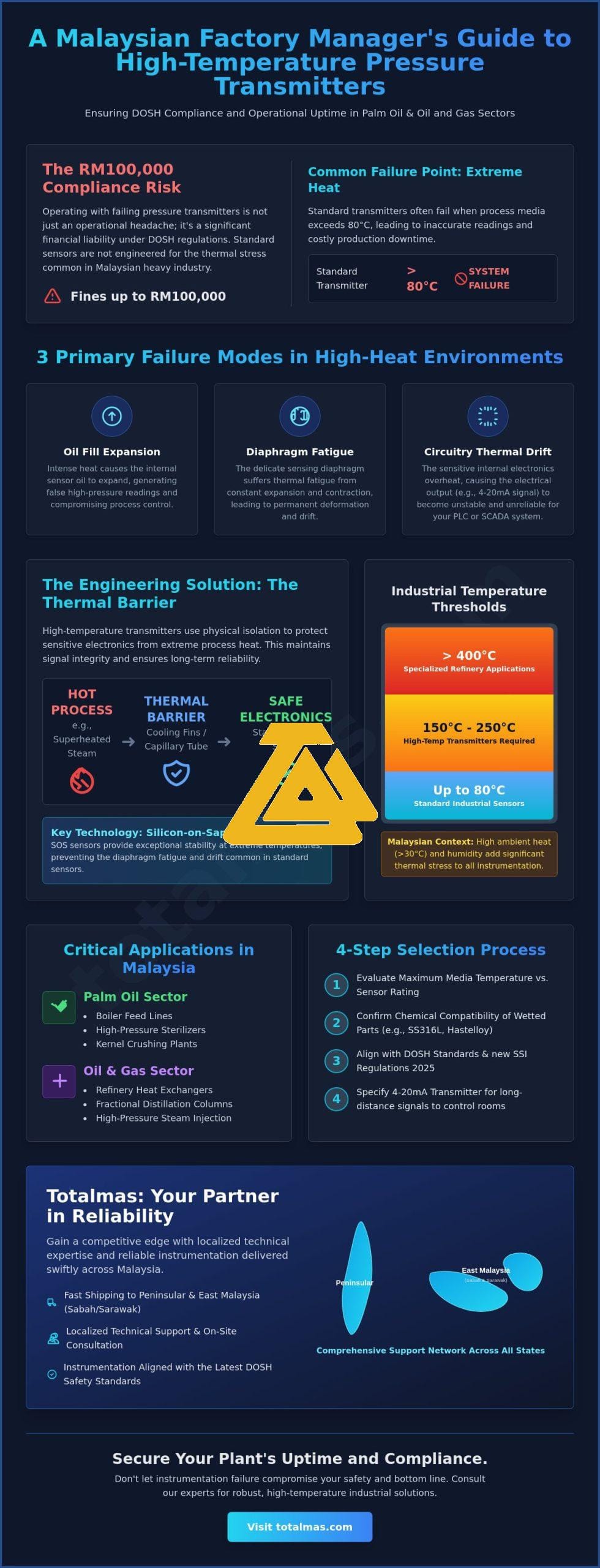
To understand what pressure transmitters do in these scenarios, you must consider the thermal barrier concept. These devices use physical isolation, such as cooling fins or capillary tubes, to separate sensitive electronics from the intense process heat. Without this barrier, standard transmitters succumb to three primary failure modes. First, the oil fill within the sensor housing expands, creating a false pressure reading. Second, the sensing diaphragm experiences thermal fatigue, leading to permanent deformation. Finally, the internal circuitry suffers from thermal drift, where the electrical output becomes unstable and unreliable.
For a factory manager in Malaysia, these failures lead to more than just maintenance headaches. In steam distribution systems, inaccurate pressure readings result in incorrect energy billing and inefficient boiler operations. In the oil and gas sector, a failed transmitter on a high-pressure heat exchanger can lead to catastrophic safety breaches that impact your DOSH compliance status.
The Difference Between Sensors, Transducers, and Transmitters
It’s helpful to distinguish between the components used in your plant. A sensor is the raw element that reacts to pressure, while a pressure transducer converts that reaction into a voltage signal (mV/V). However, for the large-scale layouts found in Malaysian industrial parks, transmitters are the preferred choice. They convert the signal into a robust 4-20mA or digital output. This allows for long-distance transmission to a control room without signal degradation or interference from heavy machinery.
Temperature Thresholds in Industrial Measurement
Most industrial sensors are rated for a standard range up to 80°C. Once your process involves superheated steam or thermal oils reaching 150°C to 250°C, you require extended-range high temperature pressure transmitters. In specialized refinery applications, temperatures can even exceed 400°C. In Malaysia, the high ambient humidity adds another layer of stress. Moisture ingress combined with high heat accelerates the degradation of seals and connectors. This makes high-quality, ruggedized instrumentation essential for long-term reliability across both Peninsular and East Malaysia.
Key Technologies for Thermal Protection and Accuracy
Selecting the right technology for pressure measurement in high-heat environments requires a deep understanding of both material science and physical isolation. While Section 1 highlighted the risks of thermal drift, the solution lies in how the sensor is constructed and protected. Modern Key Technologies for Thermal Protection and Accuracy often utilize Silicon-on-Sapphire (SOS) technology. SOS sensors are particularly effective because sapphire acts as an excellent electrical insulator and remains structurally stable at extreme temperatures. This prevents the diaphragm fatigue that typically plagues standard piezoresistive sensors when they’re exposed to the fluctuating heat of a palm oil sterilizer or a refinery line.
It’s vital to distinguish between managing the process media temperature and the ambient environmental temperature. In Malaysia, where ambient temperatures often exceed 30°C with high humidity, managing the heat around the transmitter housing is just as important as managing the heat inside the pipe. Piezoresistive sensors are common for general industrial use, but piezoelectric sensors are often preferred for dynamic pressure measurements in extreme heat because they don’t require an external power source to generate a signal, reducing the heat generated by the electronics themselves.
For factory managers looking to optimize their instrumentation, Totalmas offers technical assistance to help you determine which sensing physics best suits your specific operational heat profile.
Remote Diaphragm Seals and Capillaries
Remote seal systems are a primary defense against extreme heat. By using a flexible capillary tube filled with specialized fluids, you can physically move the transmitter electronics away from the hot process point. High-temperature silicone oils are typically used as fill fluids, but you must account for their expansion rates. Longer capillaries provide better cooling but can slightly increase response times. It’s a balance that requires precise calculation to ensure your control system receives accurate data without the lag that could trigger a safety shutdown.
Thermal Isolation and Cooling Accessories
In steam applications, passive cooling accessories like pigtail or U-siphons are essential. These create a water seal that prevents live steam from directly contacting the sensor. For compact installations where a long capillary isn’t practical, cooling fins are a highly effective alternative. A well-designed set of cooling fins can reduce the temperature reaching the electronics by approximately 50°C per 10cm of stand-off length. This simple mechanical solution significantly extends the lifespan of high temperature pressure transmitters by keeping the internal circuitry within its safe operating range. Whether your plant is located in the industrial hubs of Selangor or the remote areas of Sabah and Sarawak, utilizing these accessories is a cost-effective way to prevent premature equipment failure.
Critical Applications in Malaysia’s Oil, Gas, and Palm Oil Sectors
In the Malaysian industrial landscape, the operational demands for high temperature pressure transmitters vary significantly between the upstream oil fields of Sarawak and the palm oil mills of Peninsular Malaysia. Each environment presents unique thermal and chemical stressors that require specific instrumentation configurations. In power generation, for example, monitoring superheated steam at turbine inlets is critical for maintaining grid stability and preventing equipment fatigue. These applications require sensors that can provide stable readings while enduring constant thermal cycling.
A growing area of focus in 2026 is the integration of these sensors into sustainable energy systems. When managing a waste heat recovery unit Malaysia, precise pressure data at temperatures often exceeding 200°C is essential to maximize energy extraction from exhaust gases. Totalmas supports these specialized installations with expert technical assistance and fast shipping, ensuring your energy efficiency projects remain on schedule regardless of your location.
Palm Oil Processing Challenges
Palm oil mills face distinct challenges, particularly during peak harvest seasons when machinery operates 24/7. The sterilization process involves high-temperature steam that can be both corrosive and physically demanding on sensors. To maintain mill safety and adhere to international standards, transmitters in these areas must often utilize food-grade oil fills. This ensures that if a diaphragm breach occurs, the crude palm oil remains uncontaminated. The durability of your high temperature pressure transmitters in these humid, high-heat environments is a primary factor in reducing unplanned downtime and maintaining your DOSH Certificate of Fitness. Complementing your pressure instrumentation with a reliable Murphy PowerView display Malaysia solution can further enhance real-time engine monitoring and help prevent catastrophic equipment failures in these demanding mill environments.
Oil & Gas and Petrochemical Refining
The standards for Critical Applications in Malaysia’s Oil and Gas Sector frequently involve High Pressure High Temperature (HPHT) environments. In refinery heat exchangers and downhole monitoring, instrumentation must meet stringent ATEX or IECEx certifications for use in hazardous zones. These environments demand the highest level of reliability to prevent leaks and ensure worker safety. Facilities operating in these conditions also rely on compliant fluid-handling equipment, and sourcing API 610 centrifugal pumps Malaysia that meet the rigorous 12th edition standards is equally critical for maintaining operational uptime across refineries and offshore platforms.
Differential pressure transmitter measurement is also vital for high-temperature filtration systems within refineries. Monitoring the pressure drop across filters allows for predictive maintenance, preventing system overpressure. For detailed insights on connecting these devices to your facility’s control network, you can reference our guide on how to integrate a pressure sensor for industrial automation. Whether your operations are centered in the industrial hubs of Johor or offshore platforms in Sabah and Sarawak, Totalmas provides the logistical reach and technical support necessary to maintain operational excellence.
How to Select the Right High-Temp Transmitter for Your Facility
Choosing the correct instrumentation requires a methodical approach that balances performance with longevity and total cost of ownership. For a Malaysian factory manager, this process starts with a clear understanding of the operational environment. You must follow a structured selection sequence to ensure your high temperature pressure transmitters remain reliable under the unique stressors of local industrial sites. Totalmas provides comprehensive technical assistance to guide you through these four essential steps.
- Step 1: Define Temperature Limits. You must distinguish between the maximum media temperature and the maximum ambient temperature. In Malaysia, high ambient heat and humidity often require additional thermal protection even if the process media is within standard limits.
- Step 2: Identify Chemical Compatibility. Evaluate the “wetted parts” that come into direct contact with your process. Corrosive palm oil derivatives or sour gas in oil and gas applications require specific alloys to prevent premature failure.
- Step 3: Select the Output Signal. While 4-20mA is the industry standard for long-distance reliability, the HART protocol is increasingly preferred in East Malaysia for remote diagnostics. IO-Link is a modern alternative for plants moving toward Industry 4.0.
- Step 4: Determine Mounting Constraints. Decide between direct mounting with cooling fins or a remote seal system with capillaries. This choice depends on the physical space available and the degree of thermal isolation required.
Material Selection for Wetted Parts
Stainless Steel 316L is the baseline for most industrial applications; however, it may not suffice for highly corrosive environments. Hastelloy is an excellent alternative for aggressive high-temperature media. You should also consider diaphragm thickness. A thicker diaphragm offers better durability but can reduce sensitivity. For seals, Viton is common for temperatures up to 200°C; however, PTFE is often required when chemical resistance is the priority. Totalmas maintains a robust inventory of these materials, ensuring fast shipping to Peninsular Malaysia, Sabah, and Sarawak.
Signal Integrity and Automation Integration
Heat naturally causes signal drift. High-quality transmitters include internal temperature compensation to maintain accuracy as the process heats up. Utilizing the HART protocol allows your team to perform remote calibrations and diagnostics, which is vital for hard-to-reach installations. For facilities aiming for maximum efficiency, integrating these sensors alongside differential pressure transmitters and high accuracy flow meters ensures a balanced and optimized system. If you need help specifying the right equipment for your facility, contact Totalmas for expert consultation and technical support tailored to the Malaysian landscape.
Totalmas: Reliable Instrumentation and Technical Support Across Malaysia
Totalmas has established itself as a cornerstone of the Malaysian industrial sector over the last 33 years. This deep-rooted experience means we don’t just supply hardware; we provide the technical confidence required to manage complex systems in the palm oil and oil and gas industries. When your facility relies on high temperature pressure transmitters to maintain safety and efficiency, you need a partner that understands the specific challenges of the local climate and regulatory environment. Our role as an authorized distributor for leading instrumentation brands ensures that every product we deliver meets the highest standards of reliability.
We’ve built our reputation on a foundation of trust and long-term partnership. We recognize that factory managers face immense pressure to reduce downtime while adhering to the 2024 OSHA amendments and DOSH requirements. Totalmas acts as a single point of contact for these needs, offering a steady hand and expert guidance for even the most complex high-heat installations. Whether you’re integrating new sensors into a waste heat recovery system or replacing aged units in a refinery, our technical team is equipped to provide solutions that work the first time.
Fast Distribution to Sabah and Sarawak
Logistics shouldn’t be a barrier to operational success. We’ve optimized our distribution network to ensure fast shipping across the entire country, with a particular focus on East Malaysia. We understand that a delay in Miri or Bintulu can lead to significant production losses in the oil and gas sector. To mitigate this, we maintain local stock availability for common pressure ranges, allowing us to reduce lead times for critical components. Our logistics expertise covers the vast distances of the Malaysian landscape, ensuring that your high temperature pressure transmitters arrive at your site in Sabah or Sarawak promptly and in perfect condition. Working with a dependable industrial pressure transmitter supplier who understands the logistical realities of East Malaysia is essential to avoiding the costly two-week transit delays that can halt production at critical facilities.
Technical Partnership and After-Sales Support
Our commitment to your facility doesn’t end at the point of sale. We provide comprehensive technical assistance, including on-site consultations for factory managers from Kuala Lumpur to the remote corners of the peninsula. If your team is struggling with signal drift or installation errors in 150°C+ environments, our specialists are available to troubleshoot and resolve the issue. We pride ourselves on offering customized solutions for unique high-temperature challenges, such as selecting the right capillary lengths or diaphragm materials to match your specific process media. This level of after-sales support ensures that your instrumentation remains accurate and compliant for years to come, protecting both your personnel and your bottom line.
Optimizing Your Plant’s Thermal Performance for 2026
Achieving stable pressure measurement in extreme thermal environments is essential for both operational safety and long-term profitability. By correctly implementing high temperature pressure transmitters that utilize Silicon-on-Sapphire technology or remote seal systems, you can effectively eliminate sensor drift and prevent the costly downtime associated with instrument failure. This technical precision ensures your facility remains compliant with the latest Department of Occupational Safety and Health (DOSH) standards and the 2025 risk-based inspection frameworks.
Totalmas brings over 33 years of Malaysian industry experience to your project. We provide specialized technical support for complex installations in the oil and gas and palm oil sectors, ensuring your operations stay functional from the peninsula to the industrial hubs of Sabah and Sarawak. Our fast shipping network is designed to meet the urgent needs of factory managers, providing a reliable supply chain for critical instrumentation across all Malaysian territories.
Contact Totalmas for a Technical Consultation on Pressure Solutions to enhance your plant’s reliability and accuracy. We’re committed to being your steady partner in navigating the challenges of 150°C+ environments and securing a successful operational future for your facility.
Frequently Asked Questions
What is the maximum temperature a high-temperature pressure transmitter can handle?
Most specialized high temperature pressure transmitters can handle process media temperatures ranging from 150°C to 400°C depending on the sensing technology and isolation method used. While standard industrial sensors fail when process heat exceeds 80°C, models designed with cooling fins or remote seals can operate reliably in the extreme heat of a refinery or palm oil mill. Totalmas provides expert consultation to help you match the specific temperature rating to your facility’s operational requirements.
How do remote seals protect pressure transmitters from heat?
Remote seals protect the transmitter by physically isolating the electronics from the hot process point through a flexible capillary tube. This tube is filled with a specialized fluid, such as high-temperature silicone oil, which transfers the pressure signal while allowing the heat to dissipate along the length of the capillary. This setup is ideal for Malaysian plants where space near the heat source is limited or where the process media is too aggressive for direct contact.
Can I use a standard pressure transmitter for steam applications?
You shouldn’t use a standard transmitter for live steam because the high temperatures will quickly cause diaphragm fatigue or electronic failure. Steam in industrial boilers often exceeds the 80°C limit of standard sensors. For these applications, you require either a dedicated high-temperature model or a standard unit equipped with a pigtail siphon. The siphon creates a water seal that prevents live steam from directly touching the sensor element, protecting your investment from thermal shock.
Does high temperature affect the accuracy of pressure measurements?
Yes, high temperatures can cause significant accuracy issues through thermal drift and the expansion of internal fill fluids. If a transmitter isn’t properly compensated, the heat can shift the zero and span of the signal, leading to false readings that impact your production efficiency. Totalmas offers technical assistance to help factory managers across Peninsular and East Malaysia select instruments with robust temperature compensation circuitry to maintain signal integrity in 150°C+ environments.
What is the best material for high-temperature diaphragms in corrosive environments?
Hastelloy C-276 is widely regarded as the best material for diaphragms when dealing with both high heat and corrosive media, such as sour gas or acidic palm oil derivatives. While Stainless Steel 316L is a reliable choice for many steam and oil applications, Hastelloy provides superior resistance to pitting and stress corrosion cracking. Choosing the right wetted parts is essential for reducing maintenance frequency and ensuring the long-term reliability of your instrumentation.
How often should high-temperature pressure transmitters be calibrated?
You should typically calibrate these transmitters every 6 to 12 months to remain compliant with DOSH standards and maintain measurement accuracy. In environments where thermal cycling is frequent, you might need to check for signal drift more often. Utilizing SIRIM-accredited calibration services ensures your instruments meet Malaysian national standards, which is vital for maintaining a valid Certificate of Fitness for your pressure vessels.
Are there wireless options for high-temperature pressure monitoring?
WirelessHART is a proven option for monitoring pressure in remote areas where running cables is too expensive or physically impossible. This technology is particularly useful for large industrial sites in Sabah and Sarawak. When using wireless options in high-heat zones, it’s critical to ensure the transmitter housing is thermally isolated to protect the battery and internal radio from degradation. Totalmas can help you integrate these wireless solutions into your existing automation network.
What certifications are required for high-temp transmitters in Malaysian O&G?
In the Malaysian oil and gas sector, instrumentation must hold ATEX or IECEx certifications to operate legally in hazardous zones. Furthermore, any transmitter used on a pressure vessel must be part of a system registered with the Department of Occupational Safety and Health (DOSH). Totalmas ensures fast shipping of certified equipment and provides the technical support necessary to help you navigate these regulatory requirements across all Malaysian states.