Could the right electromagnetic flow meter still be the wrong choice for your process? Before comparing an electromagnetic flow meter supplier Malaysia can offer, confirm that your liquid and operating conditions suit the measurement method. For factory managers in oil and gas or palm oil, process fit comes first.
It’s understandable to focus on product range, delivery and support when shortlisting suppliers. But a useful recommendation depends on clear application details, including the liquid being measured and the site conditions. This guide explains how to assess suitability, what information to prepare for a supplier discussion, and how to compare technical information alongside product options.
You’ll also learn what to consider for Malaysian operations, from process requirements in palm oil and oil and gas facilities to the information a supplier may need to discuss your application. Totalmas, a Kuala Lumpur-based supplier of flow meters and industrial instrumentation, offers flow meters for industrial requirements. The aim is a clearer, more practical enquiry before you select a meter.
Key Takeaways
- Check whether your process liquid is conductive and document its composition and operating conditions before requesting a recommendation.
- Compare electromagnetic and alternative flow measurement technologies against your application, installation context and available process data.
- Prepare a focused enquiry with the measurement purpose and relevant site details so an electromagnetic flow meter supplier Malaysia can assess your requirements.
- Evaluate supplier communication alongside product options, including how clearly the supplier explains technical questions and missing information.
- Totalmas supplies flow meters and industrial instrumentation for industrial requirements.
What an Electromagnetic Flow Meter Measures in Malaysian Plants
An electromagnetic flow meter measures the flow of electrically conductive liquid through a pipe by detecting a voltage generated as the liquid moves through a magnetic field. Unlike mechanical flow meters, which use moving components or displacement to measure flow, electromagnetic meters use this electrical measurement principle. Their suitability depends on the liquid and installation conditions, not simply on the meter category.
For plant teams, flow data can support process monitoring and help operators observe changes in liquid movement over time. That information may contribute to operational visibility and process consistency, but a meter alone does not guarantee either. The measurement is useful only when the technology fits the application and the instrument is selected for the actual operating conditions.
How electromagnetic flow measurement works
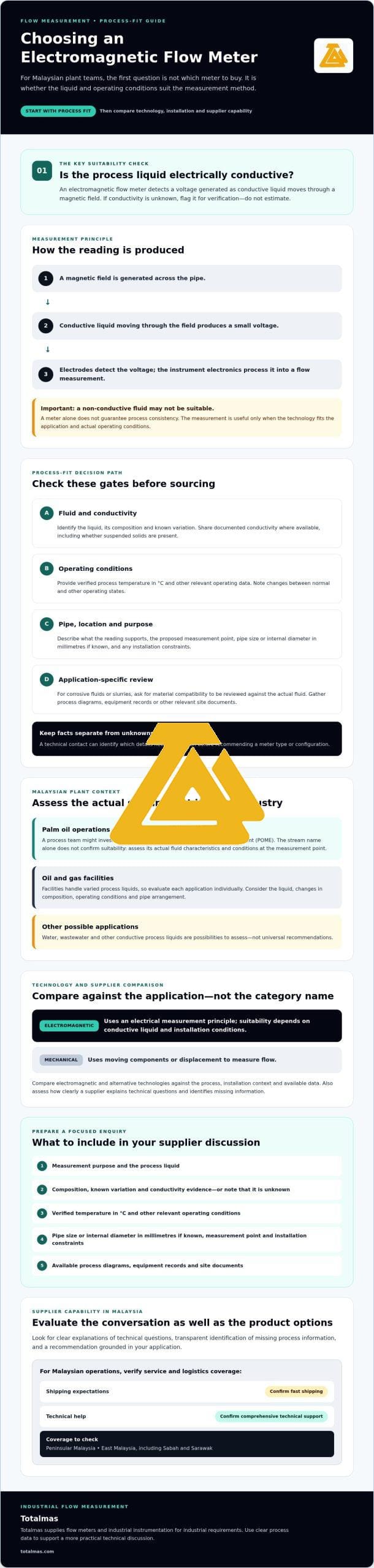
The meter generates a magnetic field across the pipe. As conductive liquid passes through that field, it produces a small voltage that electrodes detect. The instrument’s electronics process the signal and convert it into a flow measurement. This is the electromagnetic induction principle, commonly explained through Faraday’s law. Because the measurement relies on the liquid’s electrical conductivity, a non-conductive fluid may not be suitable.
Where Malaysian industries may assess this technology
Water, wastewater and other conductive process liquids are possible applications to assess. In palm oil operations, process teams might investigate measurement on a wastewater stream such as palm oil mill effluent (POME), while checking the actual fluid characteristics and conditions at the measurement point. The stream name alone isn’t enough to confirm suitability.
Oil and gas facilities handle varied process liquids, so the application needs to be evaluated individually rather than assumed to suit electromagnetic measurement. Consider what liquid flows through the pipe, how its composition may vary, and what operating conditions apply. Installation context matters too: the pipe arrangement and intended measurement point should be discussed during selection.
These are starting points for assessment, not universal recommendations. Before approaching an electromagnetic flow meter supplier Malaysia, gather available information about the liquid and installation. A supplier can then discuss whether electromagnetic measurement appears suitable or whether another flow technology should be considered. This process-first approach helps keep product selection grounded in the needs of the Malaysian plant.
Check Process Fit Before Sourcing an Electromagnetic Flow Meter
Before requesting a quotation or product recommendation, assemble the facts that determine whether electromagnetic measurement suits the process. A clear enquiry helps a technical contact distinguish confirmed operating data from assumptions and identify what still needs checking.
Start with this process-fit checklist:
- Fluid: Identify the liquid and share its composition, including known variation or suspended solids.
- Conductivity: Provide measured or documented conductivity information if available. If it’s unknown, flag it rather than estimating.
- Operating conditions: Share verified process temperature in °C and other relevant operating data, including any changes between normal and other operating states.
- Measurement purpose: Explain what the reading supports, such as process monitoring, wastewater flow tracking or another operational requirement.
- Pipe and location: Record the pipe size or internal diameter in millimetres if known, the proposed measurement point and relevant installation constraints.
- Documentation: Gather process diagrams, equipment records or other site documents that describe the line and its operating conditions.
Separate confirmed information from missing or changing data. A technical contact can advise what needs verification before the meter type or configuration is recommended.
Which fluid and process details should buyers confirm?
Confirm that the medium is a liquid and provide available evidence about its conductivity. Describe the process temperature in °C using site records, not a general estimate, and include other known operating conditions that may affect the measurement. For corrosive fluids or slurries, ask for material compatibility to be reviewed against the actual fluid composition. Don’t assume suitability from the application name alone.
What Malaysian plant teams should consider at the site
Pipe layout, access around the proposed measurement point and the surrounding operating environment can shape the application discussion. Share these details alongside available drawings or process documents. Palm oil and wastewater teams should describe the stream being measured and any known variability in its composition or operating conditions. Oil and gas teams should identify the specific process stream and provide its verified operating data.
Flow measurement can also support monitoring requirements, but regulatory context differs by jurisdiction. The U.S. Environmental Protection Agency’s Flow measurement for NPDES permit resource concerns a United States permit context, not Malaysian requirements. Use Malaysian regulatory guidance for local obligations.
Once the process information is organized, share it with an electromagnetic flow meter supplier Malaysia for a focused technical discussion. For further insights on industrial flow meter requirements, discuss your flow meter application with Totalmas.
Compare Electromagnetic Flow Meters and Supplier Capability in Malaysia
Compare technologies against the measurement task and site conditions, not just product labels. An electromagnetic meter is generally considered for conductive liquids; ultrasonic, Coriolis and mechanical options may suit different fluids, measurement objectives or installation contexts. Ask suppliers to explain the basis for their recommendation and identify any process information still needed.
When should buyers compare electromagnetic and ultrasonic meters?
Start with the liquid and the measurement purpose. If conductivity is confirmed, electromagnetic measurement may be a candidate. An ultrasonic option may also warrant discussion, depending on the fluid, meter arrangement and installation context. Neither category is automatically the better choice. Share the process data and site details so the supplier can assess suitability rather than relying on a broad application label.
| Technology | Measurement suitability to discuss | Installation and process information | Supplier assistance to seek |
|---|---|---|---|
| Electromagnetic | Conductive liquid flow, subject to confirmed process conditions | Fluid conductivity, composition, operating conditions, pipe size and measurement location | Review whether the liquid and site details support this measurement approach |
| Ultrasonic | An alternative to assess for the specific liquid and measurement task | Fluid properties, pipe arrangement, access and proposed installation context | Clarify which ultrasonic arrangement is being considered and what site data it requires |
| Coriolis | Consider where the required measurement variable and process needs make it relevant | Measured stream, operating conditions and installation constraints | Explain how the proposed measurement approach addresses the stated process objective |
| Mechanical | Assess against the application and the role of moving components in the measurement method | Fluid characteristics, operating conditions and maintenance considerations at the site | Discuss application fit and what product documentation is available |
How to assess a Malaysian flow meter supplier
A useful supplier discussion should begin with your process, not a product name. Ask whether the supplier can review fluid composition, conductivity information, operating conditions, pipe details and measurement purpose before recommending a technology. Request relevant product documentation for evaluation, and clarify how technical questions about the recommendation can be handled.
Check practical communication as well. Does the supplier distinguish confirmed facts from assumptions, explain missing information clearly and address the technical questions relevant to your plant? For palm oil, wastewater or oil and gas applications, the discussion should address the actual stream and operating conditions, not assume that every process in the sector is alike.
Confirm how the supplier handles your project’s location and any delivery or support requirements. Totalmas is a Kuala Lumpur-based supplier of flow meters and industrial instrumentation. As you compare an electromagnetic flow meter supplier Malaysia, weigh the clarity of the technical discussion, the product information available and whether the supplier can address your specific requirements.
Prepare a Clear Flow Meter Enquiry for Your Malaysian Site
A structured enquiry helps a supplier assess the application before discussing a product recommendation. You don’t need to fill every information gap yourself. Clearly identify what is known, attach relevant records where available, and mark uncertain details for follow-up.
A practical checklist before contacting a supplier
- Define the measurement task. Name the liquid or process stream and explain what the flow reading needs to support, such as process monitoring or wastewater measurement.
- Summarise known operating conditions. Share verified temperature in °C, available conductivity information, fluid composition and any known changes in the process. Label estimates and unknowns clearly.
- Describe the pipe and measurement point. Provide the pipe size and material if known, the proposed location, and any layout or access constraints relevant to the enquiry.
- Identify the site. State the plant location in Malaysia and note relevant conditions that may affect the discussion, such as whether the application is in a palm oil, wastewater or oil and gas operation.
- Attach supporting information. Include process drawings, existing instrument details, equipment records or other site documents that help explain the line. These are useful when available, but don’t guess at missing specifications.
Separate confirmed information from assumptions. This gives the supplier a clear basis for asking targeted questions and identifying what needs technical confirmation. For additional context on measurement requirements, see the high accuracy flow meters guide.
Questions to ask during technical and delivery discussions
Ask how the supplier will assess whether electromagnetic measurement suits your fluid, process purpose and installation context. Clarify which missing details could affect the recommendation, what product information is available for review, and how follow-up technical questions can be raised.
Ask how delivery arrangements are handled for the actual project location and what information is needed to confirm them. For Malaysian sites, provide the plant location and ask about any relevant logistical or technical considerations rather than assuming that arrangements are the same for every site.
If the meter forms part of a pump system, share the relevant system context and discuss how the measurement point relates to the process. The API 610 centrifugal pumps guide may be useful for that related equipment discussion.
For a focused discussion, contact Totalmas about your flow meter requirements. Totalmas supplies flow meters and industrial instrumentation for industrial applications.
Work with Totalmas on Electromagnetic Flow Meter Requirements
Totalmas Sdn Bhd is a Kuala Lumpur-based Malaysian supplier of flow meters and industrial instrumentation. For factory teams considering electromagnetic measurement, an application discussion can help bring the process requirements into focus before sourcing. The aim is to review the actual fluid and site context, then identify which details need confirmation before a recommendation is made.
What to expect from an application-focused supplier discussion
Be ready to describe the measured liquid, its purpose in the process and the plant location. Available conductivity information, operating conditions, pipe details and relevant drawings can help inform the discussion. For example, a palm oil facility assessing a wastewater stream and an oil and gas plant measuring a different process liquid will need to share the details of their respective applications rather than rely on sector labels alone.
Some specifications may not be available at the enquiry stage. Mark these as unknown instead of estimating them. Product details such as model, materials and other specifications should be checked against the confirmed application requirements before they are treated as suitable. Totalmas supplies flow meters and other industrial instrumentation to support industrial requirements.
How to take the next step with Totalmas
Prepare a concise enquiry with the site location, measured stream, measurement objective and known operating conditions. Attach process documents or existing instrument information if available, and list the questions that still need technical review. This gives the supplier a practical starting point for discussing your electromagnetic flow meter requirements.
When you make contact, ask how the supplier can address the technical details of your application and what product information is available for review. Confirm any delivery arrangements for your specific project location during the discussion rather than assuming a timeline.
If you’re assessing an electromagnetic flow meter supplier Malaysia for a plant requirement, share the available process information and discuss the application with Totalmas about your flow meter requirements. The enquiry can begin with the information your team has and identify what needs confirmation next.
Move Forward with a Process-First Meter Selection
Start by confirming the liquid and site conditions before choosing electromagnetic measurement. Conductivity, operating data, installation context and the purpose of the reading all help shape a useful supplier discussion. Comparing technologies on those requirements, rather than product labels alone, can help your team ask clearer questions and identify what still needs technical confirmation.
Prepare the information you have, including process documents or existing instrument details where available. Clearly mark unknowns instead of estimating them. In your search for an electromagnetic flow meter supplier Malaysia, assess whether the supplier can discuss your specific application and explain the relevant product information.
Totalmas is a Kuala Lumpur-based Malaysian industrial equipment supplier with flow meters as a priority offering. To discuss your process requirements and share available technical information, contact Totalmas about electromagnetic flow measurement.
A well-prepared enquiry is a practical first step toward evaluating a meter for your plant. With the process details in hand, your team can move forward with greater clarity.
Frequently Asked Questions
What does an electromagnetic flow meter measure?
An electromagnetic flow meter measures the flow of electrically conductive liquid through a pipe. It creates a magnetic field across the flowing liquid; the liquid’s movement produces a voltage that the instrument detects and converts into a flow signal. This differs from mechanical measurement methods that use moving parts. Suitability depends on the medium’s properties and the process and installation conditions, so confirm the application details before selecting a meter.
Is an electromagnetic flow meter suitable for every liquid?
No. Electromagnetic flow meters are generally considered for conductive liquids, so they aren’t automatically suitable for every medium. Before selection, confirm available conductivity information, fluid composition and operating conditions with a supplier. Share the proposed installation location and relevant pipe details as well. If data is unknown or changes during operation, identify that clearly so it can be checked as part of the application discussion rather than assumed.
Can an electromagnetic flow meter be used in palm oil processing?
It may be considered for a palm oil application, but suitability must be assessed against the actual liquid, process conditions and installation. Palm oil plants handle different streams, and the sector alone doesn’t determine whether electromagnetic measurement fits. Before selecting a meter, provide the supplier with available information about the measured fluid, its operating conditions and the measurement point. Mark unknown or changing details for confirmation.
How do I choose an electromagnetic flow meter supplier in Malaysia?
Choose an electromagnetic flow meter supplier Malaysia plant teams can engage in a process-focused discussion. Ask whether the supplier will review your fluid, operating conditions, installation details and available technical documents, then clarify open questions before recommending an option. Confirm what product information and follow-up communication can be discussed, and ask how delivery arrangements are handled for your project location. Totalmas is a Kuala Lumpur-based supplier of flow meters and industrial instrumentation.
What information should I provide when requesting an electromagnetic flow meter?
Share the measured liquid, measurement objective, known operating conditions, pipe details and installation location. Include available process drawings, existing instrument information or other relevant site documents. For temperature, use verified site data in °C where available. Clearly label estimates and unknowns rather than filling gaps with guesses. A well-prepared enquiry helps a supplier understand the application, identify missing details and discuss a suitable option for technical confirmation.
Are electromagnetic and ultrasonic flow meters interchangeable?
No. Electromagnetic and ultrasonic meters use different measurement technologies and shouldn’t be treated as automatic substitutes. The appropriate option depends on the medium, installation context, operating conditions and measurement requirements. A general claim that one technology is always better won’t account for a particular plant’s process. Share site-specific information with a supplier and ask for the reasoning behind any recommendation, including which application details still need to be confirmed.
Does Totalmas provide support and shipping to Sabah and Sarawak?
Contact Totalmas to discuss your project location, delivery arrangements and technical requirements. Totalmas supplies flow meters and industrial instrumentation from Kuala Lumpur. No specific delivery duration or support arrangement should be assumed. Share your site location, measured liquid and flow meter requirements so the relevant details can be discussed for your enquiry. Include available process information too, as this gives the technical discussion a clearer basis for reviewing the application and next steps.